
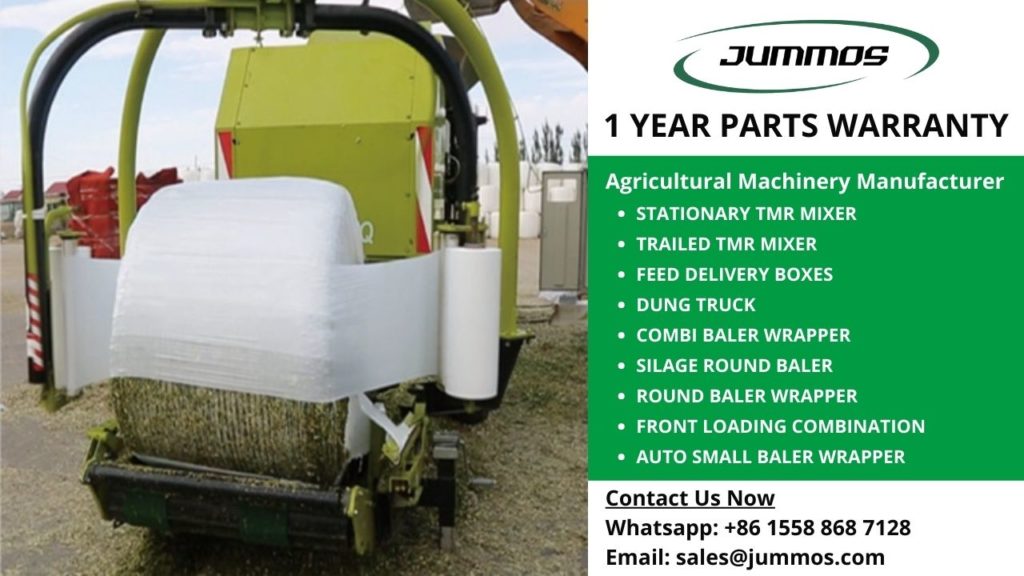
Making silage with a silage wrapping machine is most common among medium and larger farms, though smaller operations can do it on a simpler scale. The machine shortens the time needed to form and seal bales and takes a great deal of physical work out of the job. Specifications and capacity determine how smoothly the whole operation runs.
So what is silage, why should a breeder bother making it, and what should you look for in a machine? Here are the things worth knowing.
What Is Silage and Why Does It Need Wrapping?
Silage is forage preserved through fermentation rather than drying. It is worth being precise about this, because silage is sometimes described as a way of using up agricultural waste, and that undersells it considerably. Baled silage, or baleage, is forage baled at a higher moisture content than field-cured hay and then sealed in plastic so oxygen is excluded. Managed properly, it has the potential to be higher in quality and protein than dry hay, and more palatable, which means less refused at the feed bunk.
Crop residues can certainly be ensiled, and doing so is a good use of material that might otherwise be wasted. But the best silage comes from forage cut deliberately at its peak, not from leftovers. What you seal in the bale is what you get out months later, so the quality of the input sets the ceiling.
Wrapping is what makes the whole thing work. Excluding oxygen allows lactic acid bacteria to ferment the plant sugars, dropping the pH and effectively pickling the forage. Without an airtight seal, moulds and yeasts take over instead and the bale spoils. Bales should be wrapped in LLDPE film, and where there are many of them, a wrapping machine is the only realistic way to keep up.
The Detail Most Guides Leave Out: Wrap Quickly
This is the single most important practical point in silage baling, and it is the one most often treated as a scheduling afterthought.
Forage quality begins degrading the moment the crop is cut, and once a bale is formed the clock runs faster. Research examining wrapping delays found the threshold for reduction in forage quality sits at roughly four hours after baling. Extension guidance commonly recommends wrapping within four hours, with 24 hours treated as an outer limit rather than a target.
The mechanism is heat. Trials measuring internal bale temperature found that bales wrapped immediately after baling generally stayed below 100 degrees Fahrenheit, while bales left for 24 hours had already climbed to 130 degrees by the time they were wrapped. That heating is digestible protein and energy being burned off before the bale is even sealed.
This has a direct bearing on machine choice. A combination machine that bales and wraps in one pass removes the delay entirely, which is why integrated units are worth their premium on operations where the wrapping otherwise waits for a second pass or a second operator.
Round or Square Bales?
Wrapping machines are built around the bale shape, so this decision comes before the machine decision.
| Round Bales | Square Bales | |
|---|---|---|
| Outdoor storage | Better. The curved surface sheds water more readily | Less suited to sitting outside uncovered |
| Storage efficiency | Wastes space between bales when stacked | Better. Stacks tightly, saving warehouse and transport space |
| Handling | Bale fork or grab required once wrapped | Handling equipment required, especially at larger sizes |
| Best suited to | Farms storing outdoors, feeding their own herd | Operations transporting or trading bales, indoor storage |
One correction worth making, because it appears in a lot of advice: do not move a wrapped bale by rolling it. An unwrapped bale can be rolled, but once film is applied the seal is the whole point of the bale, and rolling it across ground, stubble, or gravel punctures and tears that film. Wrapped bales should be moved with a proper bale fork, grab, or handler designed for the job, and stored on a clean surface. A bale with a punctured wrap is a bale that will spoil, and you will not discover it until you open it.
“The damage I see most often is not from the machine, it is from what happens in the twenty minutes after the bale is wrapped. Someone moves it with the wrong attachment, or drops it onto stubble, and the film gets a tear nobody notices. Six months later they open a spoiled bale and blame the film. My advice is simple: budget for a proper bale handler at the same time as the wrapper, because the two belong together.”
Sue Su, Marketing Director, Jummos
Types of Silage Wrapping Machine
Wrapping machines on the market share the same working principle. They wrap automatically, so the operator handles loading the bale and the machine turns it while film is applied in overlapping layers across the whole surface. Some suppliers integrate the baler and the wrapper into a single machine, which makes the process considerably more efficient and, as noted above, removes the delay between baling and sealing.
Beyond that shared principle, machines differ in capacity, physical size, power requirement, and level of automation. To find what suits you, start by estimating the volume of forage or crop residue you actually handle in a season. Then decide the bale size and shape you are most comfortable working with, since that narrows the field quickly. It is also worth asking other farmers what they run and why, and asking your supplier for a recommendation based on your specific conditions rather than on what they would like to sell.

Does Every Farm Need One?
No. Owning a wrapping machine is not mandatory, and it is worth being honest about that rather than pretending otherwise.
Where the machine earns its place is in speed and scale. If you are making silage in serious quantity, manual wrapping simply cannot keep up, and the delay itself costs you quality for the reasons set out above. The machine is what makes it possible to bale and seal within the window that matters.
The price of a unit is not small, and it should be treated as an investment rather than an expense. The return does not arrive immediately. It arrives once you have a reliable stock of silage and no longer depend entirely on fresh forage or on bought-in feed.
That second point is where the arithmetic usually turns. Green fodder becomes scarce in the lean season, and a farm with good silage can keep nutrition steady through it. At the same time, you stop buying commercial feed at prices that tend to rise year on year. Over time this shows up in cattle condition and weight, and in sustained meat and milk output rather than a seasonal cycle of gain and loss.
Choosing a Supplier
Once you have decided the machine is worth it, the question becomes who to buy from. The honest answer is that there is no single best machine, because suitability depends entirely on the operation. A machine that serves one farm well may be wrong for the next one. This is why choosing a good supplier matters more than chasing a particular model: a supplier who understands your situation can point you to the right machine, while a catalogue cannot.
Look for experience, a reputation you can verify, and a production range broad enough that they are not simply steering you toward the one machine they make. Jummos manufactures baler wrappers across a range of sizes, from compact machines for small farms through to combi units that bale and wrap in one pass, alongside TMR mixers and other agricultural machinery, and our sister brand Silopak produces the silage film that goes with them.
Consultation costs nothing. Tell us your forage volume, your storage situation, and how quickly you need to get bales wrapped after baling, and we will tell you which machine fits.
Frequently Asked Questions
How soon should bales be wrapped after baling?
As soon as practically possible. Research on wrapping delays found the threshold for forage quality reduction at roughly four hours after baling, and extension guidance commonly recommends wrapping within four hours, treating 24 hours as an outer limit. The reason is heat: bales wrapped immediately generally stay below 100 degrees Fahrenheit internally, while bales left 24 hours had already reached 130 degrees by wrapping time. That heating consumes digestible protein and energy before the bale is even sealed.
Can I roll a wrapped bale to move it?
No. An unwrapped bale can be rolled, but once film is applied the airtight seal is the entire purpose of the bale, and rolling it over ground, stubble, or gravel will puncture and tear that film. Use a bale fork, grab, or purpose-made handler, and store bales on a clean surface. Damage to the wrap lets oxygen in, and the resulting spoilage is usually invisible until the bale is opened months later.
Should I choose round or square bales for silage?
It depends on how you store and move them. Round bales shed water better, which suits outdoor storage, and they are the common choice for farms feeding their own herd. Square bales stack tightly and use warehouse and transport space far more efficiently, which suits operations moving or trading bales. Both preserve equally well when wrapped properly, so make the decision based on your storage and logistics rather than on preservation quality.
Reviewed by Sue Su, Marketing Director of Jummos, on September 24, 2026. Wrapping timing and handling guidance was checked against current forage extension research to keep the information accurate for farmers.