
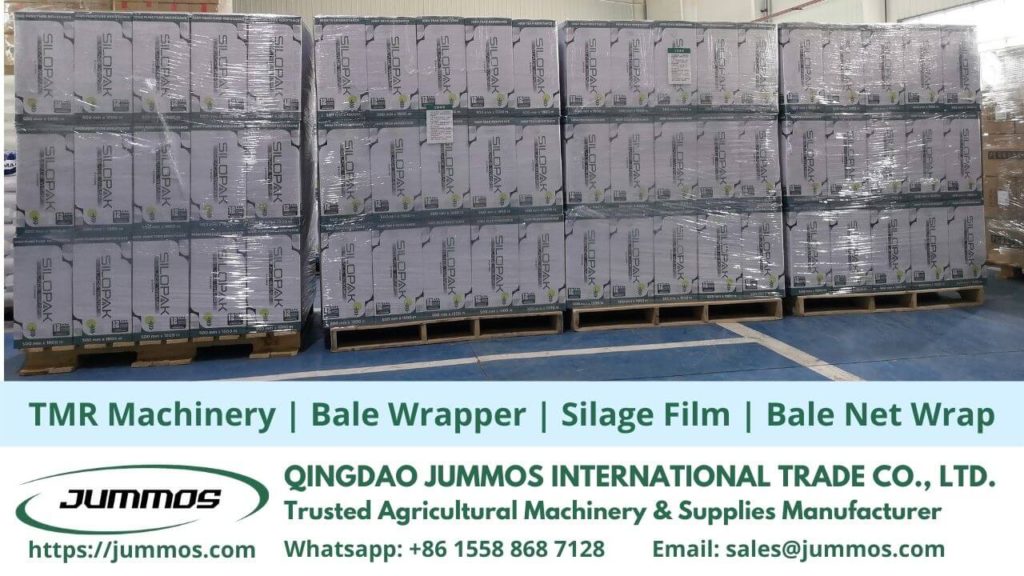
Silage film is a staple in agricultural practices, which explains the significant production of agricultural silage film globally. This essential product is manufactured in technologically advanced countries, which have the infrastructure to support high-volume production. However, it is also widely available in developing countries, where the production of silage film is tailored to meet local agricultural needs.
For example, many modern countries prefer silage wrap over other types of silage film due to their farmers being equipped with advanced machinery during the harvesting and silage preparation process. In contrast, in developing countries, traditional farming methods prevail. Here, farmers often opt for silage bags instead of wraps to avoid the necessity of investing in a bale wrapper machine. Instead, they rely on community efforts to collect fodder and manage the harvest. Whichever method a farmer chooses, the underlying goal is the same: to lock away the nutrition in fresh forage so it can be fed out long after the growing season has ended.
What Is the Difference Between Silage Wrap and Silage Bag?
The primary purpose of agricultural silage is to protect fodder and harvest from UV rays and oxygen exposure. Both silage wrap and silage bags serve this fundamental purpose, yet they differ in application and method of use, necessitating distinct approaches.
Using silage wrap involves rolling the silage into a large bulk before encasing it with the wrap, typically with a roller machine attached to a tractor. By applying the silage film effectively, farmers can press the silage tightly, significantly reducing oxygen levels. As the silage is rolled, the film is applied in layers until a specific thickness is achieved, ensuring that the fodder is shielded from UV light. The result is a sealed, oxygen-free environment inside the bale, which is exactly what good fermentation depends on. When oxygen is kept out, the beneficial bacteria that preserve the forage can do their work, and the feed stays fresh and palatable for many months.
In contrast, silage bags do not require rolling the silage into bulk. Instead, the silage is simply pressed down into the bag. Farmers can also incorporate seeds into their fodder mix using bags, a method commonly adopted by those preparing silage blends that include hay and other harvests for livestock feed. Many farmers prefer silage bags for their ease of use, particularly when they lack the necessary equipment to roll and press silage effectively. The trade-off is that bags are generally more labor-intensive to fill by hand and can be more prone to damage from birds, rodents, or careless handling, so they need to be checked regularly through the storage period.
Choosing between the two often comes down to scale and equipment. A farm with a bale wrapper and a steady flow of forage will usually favor wrap, because it is faster, produces uniform bales that are easy to stack and transport, and gives an excellent seal. A smaller or community-based operation without that machinery may find bags the more practical entry point. Neither is universally better. The right choice is the one that matches the farm’s equipment, labor, and the way the feed will eventually be used.
Which Silage Film Width Fits Your Baler?
One question that comes up again and again from farmers is a simple but important one: what size silage film should I use for my round baler? It is a fair question, because using the wrong film width wastes material and can leave bales poorly sealed, which defeats the whole purpose of wrapping in the first place. The answer is that silage wrap film width for a baler is not arbitrary. Each width is matched to a particular bale size, so the film you need is decided by the bales your machine produces.
The logic is straightforward once you see it laid out. Narrow film wraps small, light bales, and wider film wraps larger, heavier ones. So if you already know the size of bale you want to make, the film width follows automatically, and so does the machine. Silopak, working alongside the Jummos baler range, produces silage stretch film in the standard widths used across that range, so the film and the machine are matched from the very start. The table below shows how it all lines up.
| Silage Film Width | Typical Bale Weight | Best Suited To |
|---|---|---|
| 250mm film | 50 to 120 kg | Small farms and compact bales |
| 330mm film | 150 to 200 kg | Medium bales and mixed operations |
| 500mm film | 500 to 600 kg | Commercial farms and half-ton bales |
| 750mm film | 950 to 1000 kg | High-volume operations and one-ton bales |
To give a practical example, a farmer running a compact machine that produces small bales of around 50 to 120 kg will need 250mm film, while a large commercial operation making one-ton bales will be looking for 750mm film. In between, 330mm film suits the medium bales that many mixed farms produce, and 500mm film matches the substantial half-ton bales favored by many working dairy and beef farms. If you are searching for a baler based on the film it runs, such as a 750mm film baler for big bales or a 250mm film baler for compact ones, the same table works in reverse: pick your bale size, read across to the film width, and that points you to the right class of machine.
It also helps to think about the net wrap at the same time. A complete wrapping setup uses net wrap to hold the bale’s shape and then stretch film to seal it, and the two need to be sized to match the bale as well. This is one of the practical advantages of buying from a single source. As both a silage film and net wrap supplier for balers, Silopak can provide the film and the matching net wrap together, sized correctly for your machine, which removes the common frustration of trying to fit consumables from one supplier onto a baler from another. When the film, the net, and the machine are all matched from the start, you get a cleaner, tighter seal and less wasted material.
Are There Other Agricultural Silage Film Products?
The realm of agricultural silage film extends beyond just wraps and bags. For those who do not intend to move their fodder, a top cover can be a practical option, reducing the need for multiple types of silage films. While a top cover can adequately protect the fodder, it is essential to ensure that all corners are sealed properly. If not, spoilage can occur more readily. A top cover is most often used over bunker or pit silage, where a large mass of forage is packed down and then sealed at the surface, so getting the edges weighted and airtight is the single most important step.
If you plan to keep silage for a shorter duration, consider using a bale net instead of relying on film alone. Bale nets are popular among farmers due to their ease of application, and they do an excellent job of holding a bale’s shape as it comes off the machine. However, on their own they have significant drawbacks: a bare net does not effectively resist moisture, UV rays, or oxygen exposure. Consequently, silage held only in a bale net may still be vulnerable, making this option better suited for farmers who need to transport their harvest over a short period rather than store it long-term. In practice, net wrap and stretch film are usually used together rather than as alternatives, with the net shaping the bale and the film sealing it.
There is also the inner barrier film to consider for high-value silage. This is an additional layer applied inside the outer wrap to give an extra measure of oxygen protection, and it is particularly worthwhile on premium forage where every bit of preserved nutrition counts. Globally, various agricultural silage films are available, but it is crucial to ensure that the products you purchase are specifically labeled for agricultural use. This distinction guarantees that the film will perform effectively in farming applications, standing up to sunlight, temperature swings, and the long months of storage that ordinary plastic simply cannot handle.
How Silage Film Protects Your Forage
It is worth pausing on why a good film matters so much, because it is easy to think of it as just plastic. In reality, the film is doing a demanding job. From the moment forage is cut, it begins to lose quality, and the two main enemies are oxygen and moisture loss. Oxygen allows unwanted molds and yeasts to grow, which spoils the feed and can even make it dangerous for livestock. A quality silage film creates and maintains an airtight barrier that starves those organisms of the oxygen they need, allowing the good fermentation bacteria to take over instead.
At the same time, the film has to survive months outdoors. It faces direct ultraviolet light, which breaks down ordinary plastic, along with rain, wind, and the heating and cooling of day and night. This is why agricultural silage film is engineered differently from generic plastic sheeting. It is made to stretch and cling without tearing, to resist UV degradation, and to hold its seal through a full storage season and beyond. When farmers cut corners with unsuitable film, the failures show up as moldy edges, spoiled patches, and wasted feed, which almost always costs more than the saving on cheaper film.
The number of layers also plays a part. Wrapping a bale in more layers of film increases the density of protection, guarding against punctures and tears on the outside while blocking more UV and oxygen on the inside. This is why the wrapping process applies the film in overlapping layers rather than a single pass. Getting the layer count and the stretch right is part of what separates a bale that ferments cleanly from one that spoils, and it is another reason that matching the film to the machine matters.
Why Choose Silopak for Your Agricultural Silage Film Needs?
If you are considering purchasing agricultural silage film, look no further than Silopak. Silopak has established a reputation for shipping high-quality silage film products worldwide. Their manufacturing capabilities extend beyond just agricultural silage film; they also produce bale nets and bale films, which means a farmer can source a complete wrapping solution from one place rather than piecing it together from several suppliers.
Silopak is recognized as a trusted company, producing durable silage films designed to last for over 18 months. For their oxygen barrier films, the company guarantees that the product will maintain its effectiveness for at least one year of use. Because Silopak shares a manufacturer with the Jummos range of baler wrapper machinery, the film, the net wrap, and the machine that applies them all come from a single, coordinated source. That is a genuine practical benefit, because it means the consumables are sized and matched to the equipment from the outset.
For farmers thinking about the wider picture, it helps to see how the pieces fit together. The silage film seals the forage, the baler wrapper forms and wraps the bale, and once the season turns, that preserved silage feeds directly into a total mixed ration to keep livestock well fed through the leaner months. Quality film at the start of that chain protects the value of everything that follows.
For further information about Silopak’s silage film products, to confirm the right film width and net wrap for your baler, or to explore your options, please contact our customer service team.
Frequently Asked Questions
What size silage film do I need for my round baler?
The film size depends on the bale your machine produces. As a general guide, 250mm film suits small compact bales of 50 to 120 kg, 330mm film suits medium bales of 150 to 200 kg, 500mm film suits large bales of 500 to 600 kg, and 750mm film suits one-ton bales of around 950 to 1000 kg. The simplest approach is to start from your target bale size and match the film width to it. If you are unsure, Silopak can confirm the correct film width and matching net wrap for your specific baler.
Can I get the net wrap and silage film from the same supplier?
Yes. Silopak is both a silage film and net wrap supplier, so you can source the stretch film and the matching net wrap together, sized correctly for your baler. Buying both from one place ensures they are matched to each other and to your machine, which gives a cleaner, tighter seal and reduces wasted material. It also removes the guesswork of trying to fit consumables from different suppliers onto the same baler.
What is the difference between silage wrap, silage bags, and a top cover?
Silage wrap involves rolling forage into a bulk bale and sealing it in layers of stretch film, which gives an excellent airtight seal and is ideal for farms with a bale wrapper. Silage bags press the forage into a bag without rolling, which suits farms without wrapping machinery. A top cover is a single sheet used over bunker or pit silage where the fodder will not be moved, and its success depends entirely on sealing the edges properly. Each method serves the same goal of keeping oxygen out, but suits a different scale and level of equipment.
How long does agricultural silage film last?
Quality agricultural silage film is designed to protect forage through a full storage season and beyond. Silopak’s durable films are made to last for over 18 months, and its oxygen barrier films are guaranteed to remain effective for at least one year of use. The key is to use film specifically labeled for agricultural use, since it is engineered to resist UV light, temperature changes, and long outdoor storage in a way that ordinary plastic sheeting cannot.
Reviewed by Sue Su, Marketing Director of Jummos, on July 29, 2026. The film width and product details were checked against current Silopak and Jummos product data to keep the guidance accurate for farmers.