
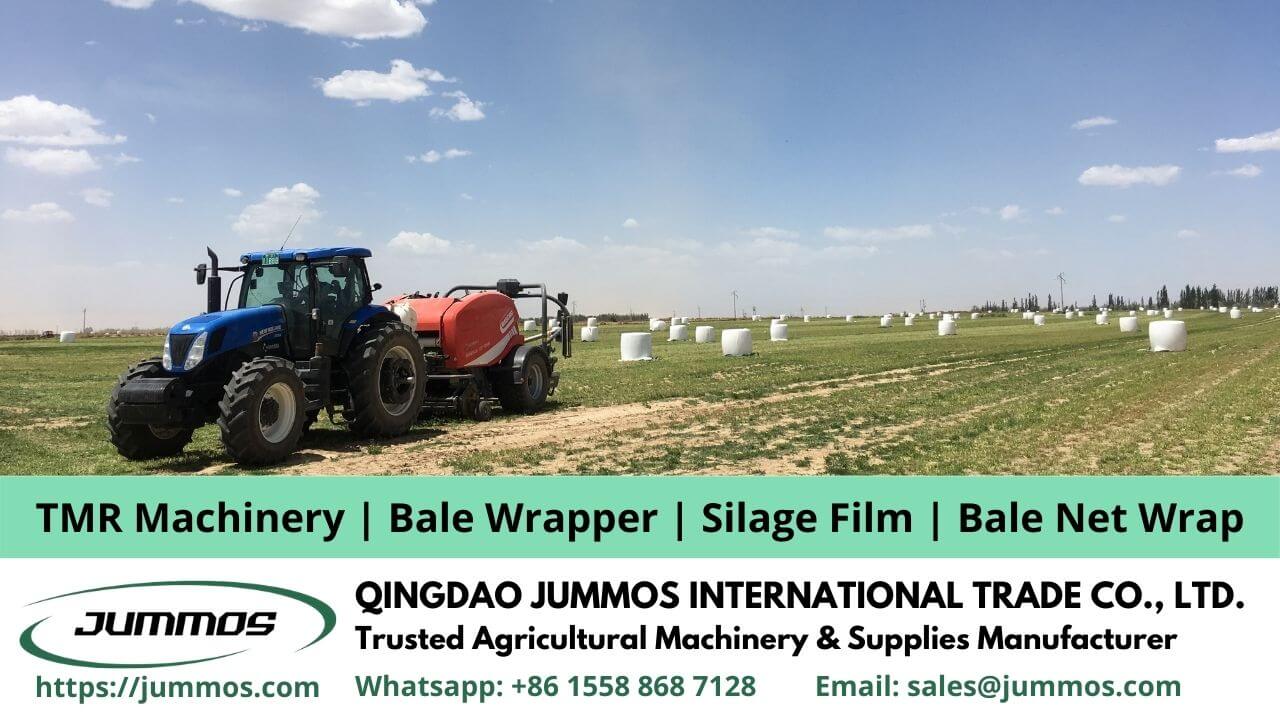
The United States is one of the world’s largest agricultural producers, and its farming sector is defined less by land alone than by how heavily it leans on technology and mechanization. American farms are highly equipped, highly organized, and increasingly focused on getting the most value out of every ton of forage they grow. That focus is exactly why silage film in the USA has become such a standard part of the feed operation.
Many large US dairy operations house their herds in barns for much or all of the year, which allows more animals to be managed in one place under controlled conditions. This is quite different from a country like New Zealand, where dairy farming is built around pasture and cattle graze outdoors for most of the year. When cattle are housed rather than grazing, the responsibility for feed shifts entirely to the farmer, who has to supply the right quality and quantity of forage every single day. That makes preserved forage, and the film that protects it, a necessity rather than a convenience.
Why Silage Film Is So Important on US Farms
Not every part of the United States is well suited to year-round grazing. Some regions are too dry to sustain pasture through the season, and much of the country deals with harsh winters or sudden weather swings that can wipe out a grazing plan. Farms in those areas cannot rely on green land being available when the animals need it.
The practical answer has been to grow forage during the productive months, preserve it, and feed it out across the rest of the year. Silage suits this perfectly, because it can be produced in volume, stored in a relatively compact space, and kept for months without losing much of its feed value. Once preserving forage becomes the central task, the quality of the film doing the preserving becomes a direct financial issue.
This is where the numbers get interesting. Research and field experience both show that better sealing translates into less waste. In one farm-scale trial, silage stored under conventional plastic covering suffered dry matter losses of around 37 percent in the top layer of the pile, compared with roughly 10 percent for the same crop stored under an oxygen barrier film. Losses on that scale are not a rounding error. They are feed the farmer already paid to grow, lost at the very last step.
What Features Do US Farmers Look For in Silage Film?
American buyers tend to judge silage film on a few specific performance points rather than on price alone. The most important of these is the oxygen barrier.
Oxygen Barrier Performance
Oxygen is what spoils silage, so the film’s ability to keep it out is the single most valuable feature. Oxygen barrier films are engineered specifically for this, and the difference over ordinary covering is substantial. Manufacturers of these films report that they can block up to 20 times more oxygen transmission than a standard black and white bunker cover used on its own.
That performance carries a real dollar value. Oxygen barrier film has been shown to reduce spoilage loss by 5 percent or more, and on a drive-over pile with a capacity of around 3,000 tons, the net saving can reach as much as $9,000. For a farm storing that kind of volume every season, the film pays for itself several times over.
Conforming Ability
The second feature US farmers look for is how well the film conforms to the silage surface. A film that clings tightly to the contours of the pile eliminates the air pockets that would otherwise sit trapped beneath the cover. Those pockets are small reservoirs of oxygen, and they cause exactly the kind of surface spoilage that farmers are trying to avoid. A conforming film removes them, which is why it is often used underneath a heavier bunker cover rather than instead of one.
Recyclability and Waste Handling
Environmental handling has become a growing priority. Used silage film is a significant volume of farm plastic, and across the US there are now agricultural plastic recycling programs that collect it so the material can be processed into new products. It is worth being precise here, though: most silage film is made from LLDPE and is designed to be recycled rather than to biodegrade in the field. Genuinely biodegradable options exist but remain a small niche, so for most farms the practical environmental step is proper collection and recycling of the used film.
What Sizes and Types of Silage Film Are Available?
Because American operations vary so much in scale and storage method, the film market offers a wide range of formats. Farmers generally choose based on how they store their forage.
| Film Type | Where It Is Used | Main Purpose |
|---|---|---|
| Bunker cover | Bunker silos and drive-over piles | Heavy top sheet protecting the pile from weather and physical damage |
| Oxygen barrier film | Under the bunker cover, and along sidewalls | Conforms to the surface and blocks oxygen transmission |
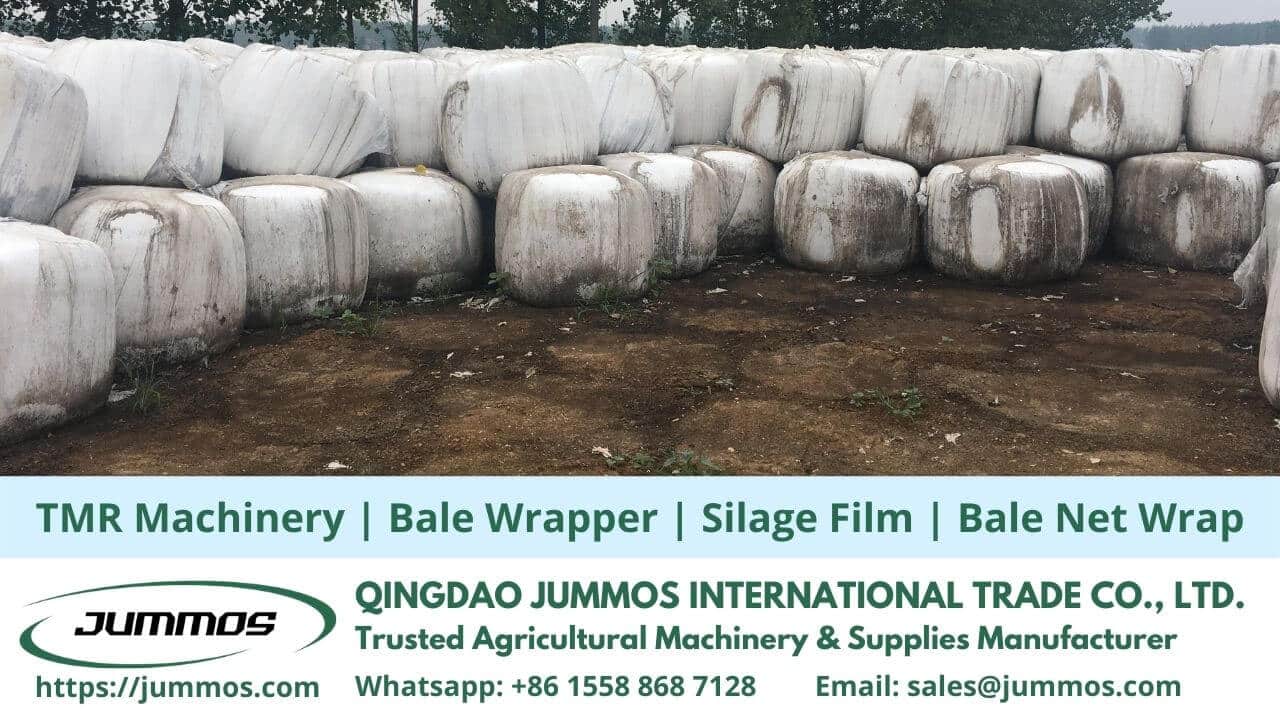
| Bale stretch film | Round and square bale silage | Wraps individual bales in airtight layers for fermentation |
| Net wrap | Applied by the baler before wrapping | Holds the bale in shape, but does not seal it |
Bunker covers and barrier films are typically sold as large sheets measured in feet, ranging from smaller sizes suitable for a modest bunker up to very large sheets capable of covering a full commercial drive-over pile in a single piece. Seamless sheets are generally preferred, since welds and joins are potential weak points where oxygen can find its way in. Bale film, by contrast, is sold on rolls and sized by width to match the baler and the bale being produced.
For farms that bale rather than pile their silage, the film width is the deciding factor, since each width is matched to a particular bale size. Our guide to agricultural silage film explains how those widths line up with bale weights, and the baler wrapper range covers the machines that apply them.
Sourcing Silage Film for a US Operation
American farms have no shortage of suppliers, but the buying decision usually comes down to matching the film to the storage system and getting consistent quality across a whole season. A farm running bunkers needs barrier film and covers sized to the pile. A farm producing baled silage needs stretch film in the right width, along with matching net wrap, and needs it to perform the same way from the first roll to the last.
This is where buying from a manufacturer that produces both the film and the machinery has a practical advantage. Silopak manufactures silage film, bale film, and net wrap, and shares a manufacturer with the Jummos machinery range, which means the consumables and the equipment that applies them are matched from the start. For US buyers importing directly, that coordination removes a lot of the guesswork around fit and compatibility.
Whatever the source, the underlying principle holds true across every American farm: the film is the last line of defense between a season’s forage and the open air. Choosing well at that step protects everything invested in growing the crop.
Frequently Asked Questions
How much can oxygen barrier film actually save a US farm?
The savings depend on the volume stored, but the figures are meaningful. Oxygen barrier film has been shown to reduce spoilage loss by 5 percent or more, and on a drive-over pile holding around 3,000 tons the net saving can reach approximately $9,000. Field trials also show dramatic differences in the top layer of a pile, where conventional plastic can lose around 37 percent dry matter compared with roughly 10 percent under barrier film. For farms storing large volumes, the film cost is recovered many times over in feed that does not have to be discarded.
Is silage film in the USA biodegradable?
Mostly not, and it is worth being clear about the distinction. The large majority of silage film is made from LLDPE and is designed to be strong, UV resistant, and recyclable rather than biodegradable. Agricultural plastic recycling programs across the US collect used film so the material can be reprocessed into new products. Genuinely biodegradable silage films exist but remain a small part of the market, so for most farms the practical environmental step is collecting and recycling the film after use rather than expecting it to break down on its own.
What is the difference between a bunker cover and an oxygen barrier film?
They do different jobs and are often used together. A bunker cover is the heavier top sheet that protects the pile from weather, birds, and physical damage. An oxygen barrier film is a thinner, highly impermeable layer that clings closely to the silage surface and blocks oxygen from reaching the crop. Used alone, a standard bunker cover is porous enough to allow noticeable spoilage at the surface. Placing a conforming barrier film underneath it eliminates trapped air pockets and blocks far more oxygen, which is why the two-layer approach has become common on larger US operations.
Reviewed by Sue Su, Marketing Director of Jummos, on August 14, 2026. The oxygen barrier performance and spoilage loss figures were checked against current industry and research sources to keep the information accurate for farmers.