
Most people think of ensiling as a way to keep feedstock until the digester needs it. That is true, but it undersells what is actually happening inside the bale. For anaerobic digestion, ensiling energy crops is both a storage method and a pretreatment, and done properly it can make the feedstock work harder once it reaches the tank.
This guide explains why wrapping matters for biogas feedstock, what the research actually shows about yield, where the limits are, and how to set up the baling side of a digester supply chain.
Why a Digester Needs Stored Feedstock at All
The basic problem is a mismatch of timing. Crops are harvested in a season. A digester runs all year, and its economics depend on running continuously rather than in bursts. Something has to bridge that gap.
Ensiling is what bridges it. Energy crops, like any agricultural crop, need to be preserved so that biomass is available throughout the year, and this is why ensiled crops became the backbone of crop digestion. The industry that grew around this is substantial: crop digestion is dominated by Germany with roughly 5,700 digesters, followed by Austria with around 290.
For a plant operator, storage is not a side activity. It is what determines whether the plant can hold a steady output through winter on material cut in summer.
Ensiling as Pretreatment, Not Just Storage
This is the part that surprises people coming from a livestock background, where ensiling is understood purely as preservation.
Research on lignocellulosic biomass has found that short-term ensiling over a few weeks acts as a biological pretreatment, increasing the convertibility of the holocellulose in the material. Work on wheat straw silage specifically found that ensiling enhanced biogas production, and studies co-ensiling other biomass with wheat straw confirmed that the process adds to digestibility and gas yield.
The mechanism is straightforward enough. Fermentation begins breaking down the plant structure before the material ever enters the digester, so the microbes in the tank are working on partially opened material rather than intact stems. You are effectively doing part of the digestion work in the bale, using time and bacteria instead of energy and equipment.
That is a genuinely useful thing to know when comparing storage options. A method that only preserves is doing less for you than a method that preserves and pretreats at the same time.
Where the Limits Are
It would be dishonest to present ensiling as free upside, because the research is equally clear that it has a window.
Long-term ensiling over about three months has been shown to result in biomass loss that affects net energy yield. Field trials put harder numbers on this. Plastic-wrapped high-moisture bales of energy sorghum reached over 40 percent dry matter loss by nine months in storage, while tarped low-moisture sorghum lost around 25 percent over the same period.
Read that carefully, because it cuts against a common assumption. Wrapping does not make a bale immortal. What it does is give you a controlled storage window with predictable behaviour. The practical conclusion for a digester operator is to plan feedstock rotation around using bales within a reasonable period, rather than treating a wrapped bale as something that can sit in the yard indefinitely without cost.
| Storage Period | What the Research Suggests |
|---|---|
| Few weeks | Acts as biological pretreatment, improving holocellulose convertibility and gas yield |
| Around three months | Biomass loss begins to affect net energy yield |
| Nine months | Wrapped high-moisture bales recorded over 40 percent dry matter loss in trials |
What Gets Ensiled for Biogas
The feedstock falls into a few broad groups, and most of it will be familiar to anyone who has made silage for livestock.
Dedicated energy crops are grown specifically for the digester, with maize silage the dominant choice in most crop digestion markets, alongside grass silage and sugar beet. Perennial crops such as Arundo donax, or giant reed, are gaining attention because they deliver high biogas yield per hectare with low agronomic input, and they are preserved by ensiling like any other energy crop.
Agricultural residues cover wheat straw, rice straw, corn stover, sugarcane tops, and legume residues. These are increasingly important because they are a sustainable substrate that does not compete with food production for land.
Co-digestion mixes crop material with animal manure in the tank, which is common on farms that already keep livestock and are looking to make use of both streams.
The common thread is that green, moist material suits digestion. Dry and woody material belongs on the combustion side instead.
“Customers coming from the biogas side ask different questions than dairy farmers do. A dairy farmer wants to know how the feed will taste to the cow. A digester operator wants to know how consistent the bales will be, because their plant is a process and it does not like surprises. What I tell them is to focus on getting the seal right and the bale size uniform. Consistent bales in means consistent gas out, and that predictability is worth more to them than squeezing an extra bale per hour.”
Sue Su, Marketing Director, Jummos
Bales or Bunkers?
Both approaches are used, and larger plants often run both.
Bunker silos and pits suit high volumes at a fixed site, which is why large digesters typically have clamps alongside the tanks. They are efficient per tonne once the infrastructure exists, though they demand good compaction and careful sealing to work well. Our guide to bunker silos covers that method in detail.
Wrapped bales suit a different set of situations. They can be made in the field wherever the crop is, moved and traded as discrete units, and stored without needing a concrete clamp. For farms supplying a digester rather than operating one, bales are usually the practical format, because they can be sold and transported by the unit. They also let a plant blend feedstock from several sources without committing everything to one clamp.
Setting Up the Baling Side
Three things matter most for feedstock quality, and none of them are complicated.
Seal integrity comes first. Fermentation depends on excluding oxygen, so the number of film layers and the quality of the wrap determine whether the bale ferments or spoils. Six layers is a common standard, with eight preferred for higher moisture material or longer storage.
Bale consistency comes second. A digester is a process, and processes prefer predictable inputs. Uniform bale size and density make feedstock planning arithmetic rather than guesswork, and they make the wrapping itself more reliable because every bale presents the same surface.
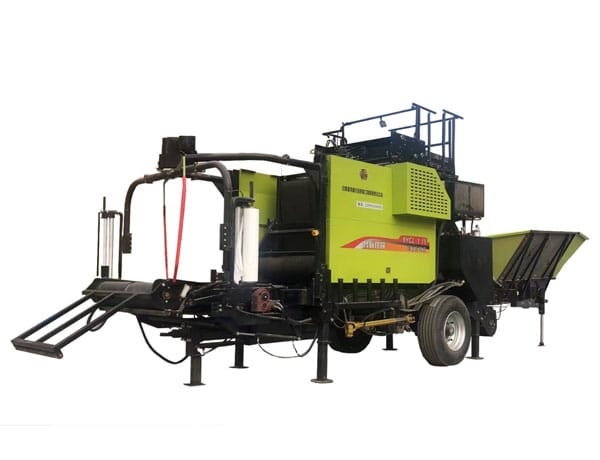
Scale-matched machinery comes third. A large plant supplied by contractors wants big, dense bales because transport cost per tonne rewards density. Our guides to the 750mm film baler and 500mm silage film baler cover those classes. A small on-farm digester, or a site without reliable grid power, is often better served by a compact machine such as the diesel baler wrapper, which brings its own power to the field.
Jummos manufactures the machines and Silopak produces the silage film that goes with them, so the wrapper and the consumable are matched from the start. Tell us the crop, the volume, and whether you are supplying a plant or operating one, and we will point you to the configuration that fits.
Frequently Asked Questions
Does ensiling really increase biogas yield?
Research indicates it can. Short-term ensiling over a few weeks has been found to act as a biological pretreatment for lignocellulosic biomass, increasing holocellulose convertibility, and studies on wheat straw silage specifically reported enhanced biogas production. Fermentation begins opening up the plant structure before the material enters the digester, so the tank receives partially broken-down feedstock rather than intact stems. The effect depends on the crop and the quality of the ensiling, so treat it as a meaningful advantage rather than a guaranteed figure.
How long can I store wrapped biogas feedstock?
Shorter than most people assume. Ensiling beyond roughly three months begins causing biomass loss that reduces net energy yield, and field trials have recorded plastic-wrapped high-moisture bales losing over 40 percent of dry matter by nine months. Wrapping gives you a controlled storage window rather than indefinite preservation, so plan feedstock rotation around using bales within a reasonable period and treat long storage as a cost rather than a neutral option.
Should I use bales or a bunker silo for digester feedstock?
It depends on your role and your scale. Bunkers suit large plants at fixed sites with the infrastructure to support them, and they are efficient per tonne once built. Wrapped bales suit farms supplying a digester rather than running one, since bales can be made in the field, traded as units, transported, and blended from multiple sources. Many large operations use both, with bunkers for their main crop and bales for material brought in from elsewhere.
Reviewed by Sue Su, Marketing Director of Jummos, on September 2, 2026. Ensiling, yield, and storage loss findings were checked against published bioenergy research to keep the guidance accurate for plant operators and growers.