
Manure Vacuum Cleaner: How Suction Machines Work and Which Type You Need
Two completely different machines are sold under the name manure vacuum cleaner, and buying the wrong one is the usual reason farmers end up disappointed. One is a barn floor scavenger that sucks manure off solid concrete in cubicle houses and feed passages, replacing a scraper pass. The other is a vacuum tanker that lifts semi liquid manure out of a pit, channel or yard and then carries it to a store or a field. They share a working principle and almost nothing else. Before any discussion of brands or prices, you need to know which of the two your farm is short of, because a tanker will not clean a feed passage and a floor scavenger will not empty a pit.
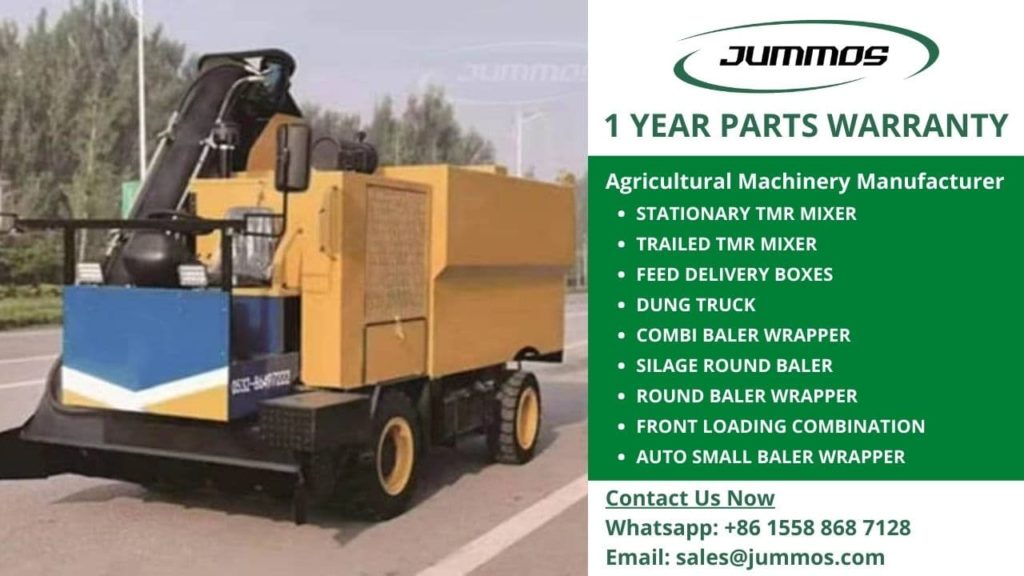
The Two Machines, Side by Side
The confusion is understandable, because sales listings for both use the same phrases. The distinction that matters is whether the machine’s primary job is cleaning a surface or transporting a volume. A floor scavenger is a cleaning tool that happens to hold a small amount of material. A vacuum tanker is a transport tool that happens to load itself.
| Barn floor scavenger | Vacuum tanker or dung truck | |
|---|---|---|
| Primary job | Clean a solid floor surface | Lift and transport a volume of slurry |
| Where it works | Alleys, feed passages, collecting yards, calf pens | Pits, channels, reception sumps, open yards, feed pads |
| Capacity | Small, emptied frequently into a store or spreader | Large, measured in litres or cubic metres per load |
| Replaces | A scraper pass or hand scraping | A pump plus a separate transport tanker |
| Material it suits | Thin layer of fresh manure on concrete | Pooled semi liquid slurry that still flows |
| Where it fails | Deep accumulations, bedded packs, straw | Thin films on a floor, long fibrous material |
If your problem is that alleys need cleaning several times a day, you are looking at the scavenger category, and you should also compare it honestly against an automatic scraper before committing. If your problem is that manure collects in a pit or across a yard and then has to get to a field, you are looking at a tanker. Our separate guide on choosing a dairy dung cleaner works through that decision by housing type, and the machines themselves are set out on the dung truck and cow dung vacuum cleaner scavenger pages.
How the Suction Actually Works, and Why It Matters
A manure vacuum cleaner does not work like the vacuum cleaner in your house. A household machine uses a fan to move a continuous stream of air, which is why it picks up dust and stops dead at anything heavy. A manure vacuum works on a sealed tank instead. A pump, usually a rotary vane type, pulls air out of the tank until the pressure inside is well below atmospheric. Open the valve and ordinary atmospheric pressure outside does the lifting, pushing slurry up the hose and into the partial vacuum you created.
That distinction explains the single most important limit on these machines. Atmospheric pressure can only support a column of water about ten metres high, so ten metres is the absolute theoretical ceiling on suction lift, and no pump design gets around it. In practice you get considerably less, usually somewhere in the region of four to six metres, because the pump never reaches a perfect vacuum, slurry is denser than water, and every metre of hose and every bend costs you pressure to friction. Any supplier claiming a suction lift far beyond that range is either measuring something else or guessing.
The consequence is practical rather than academic. A shallow channel or a yard surface is comfortably within reach. A deep store is not, and trying to serve one by suction alone produces slow, frustrating loading. The correct answer for a deep pit is a submersible or PTO driven pump that pushes material up into the tanker, with the vacuum doing none of the lifting. Knowing which situation you have before you buy saves an expensive discovery later.
The same pump usually works in reverse for unloading, which is the real elegance of the design. Instead of evacuating the tank, it pressurises it, and the slurry is pushed out through the discharge valve. One pump therefore handles both ends of the job, which is why a vacuum tanker needs no slurry pump of its own and why these machines tolerate grit far better than impeller pumps do. There is nothing with a close tolerance in the slurry path to be worn away.
What Dry Matter Does to Performance
Suction only works on material that flows. As dry matter rises, slurry stops behaving like a liquid and starts behaving like a solid that happens to be wet, and at that point a vacuum machine slows down and then stops entirely. Dairy manure as excreted is already fairly thick, and whether a vacuum machine copes depends almost entirely on how much water has joined it from parlour washings, rain on open yards and drinker spillage.
Fibre is worse than thickness. Long straw from a bedded pack will bridge across the hose inlet and block it regardless of how wet the material is, because the strands interlock rather than flow. Chopped bedding behaves better than long straw, and sawdust better again. This is the reason a bedded pack is loader and spreader territory rather than vacuum territory, and no amount of pump capacity changes it. If your bedding is long straw, decide that now rather than after delivery.
Sand bedding raises a different issue. Sand flows beautifully and will load without complaint, then settles out in the bottom of the tank and the store as a dense layer that is genuinely difficult to remove. It also accelerates wear on everything it passes through. Farms on sand need to plan for settling and removal rather than assume the material simply leaves with the slurry.
The Operating Sequence That Keeps the Machine Alive
Most damage to vacuum tankers happens through a handful of repeated operating mistakes rather than through age. The sequence below is not complicated, and the parts people skip are always the same ones.
- Agitate before loading, with the ventilation and safety precautions below. Unagitated slurry has separated into a crust, a liquid middle and a settled bottom, and you will load only the middle.
- Check the oil level in the vacuum pump. Rotary vane pumps are oil lubricated and run dry very quickly when the reservoir is low. This is the number one cause of pump failure on these machines.
- Confirm the moisture trap and shut off float are working before you start. They exist to stop slurry reaching the pump, and slurry reaching the pump usually ends the pump.
- Keep the suction hose as short and as straight as the job allows. Every bend costs lift. A hose coiled on the ground loads measurably slower than the same hose run straight.
- Watch the sight glass or level indicator rather than filling by sound. Overfilling is how slurry gets past the float and into the pump.
- Release the vacuum before opening anything. Opening a lid or hatch against residual vacuum or pressure is how people get hurt.
- Rinse the tank and hose after use, especially before any period of standing. Dried slurry inside a tank is both corrosive and unpleasant to deal with later.
Point six deserves emphasis because it is a genuine safety matter rather than a maintenance tip. The tank on a vacuum tanker is a pressure vessel, and it spends half its working life under positive pressure. The pressure relief valve and the vacuum relief valve are not optional fittings, and a machine whose relief valves have been blanked off, painted over or jammed with residue should not be put to work until they are functioning.
A Safety Point That Is Not Negotiable
Stored slurry gives off hydrogen sulfide, and agitation releases it as a sudden concentrated cloud rather than a gradual build up. It has killed farm workers and whole families, usually in the first minutes of mixing. The gas is heavier than air so it collects in pits and channels, and at dangerous concentrations it deadens your sense of smell, which removes the only warning most people are relying on. Never agitate inside a closed or partly closed building without ventilation, keep people and livestock away during and after mixing, never enter a tank or channel, and never climb into a pit after a collapsed person without breathing apparatus. Rescuers account for a significant share of the deaths in these incidents.
Troubleshooting by Symptom
Almost every fault on these machines announces itself in one of a few ways, and the causes are usually simpler than they first appear. Work down this list before calling anyone.
- Loads slowly or not at all. Check for a blocked inlet or hose first, then hose length and bends, then tank seal and lid gasket, then pump oil and pump condition. An air leak anywhere in the sealed circuit defeats a perfectly healthy pump.
- Vacuum builds then falls away. This is nearly always a leak rather than a pump problem. Lid gaskets, valve seats, the sight glass seal and the hose coupling are the usual culprits, in that order.
- Pump runs hot or noisy. Oil level and oil quality first. Then check the air inlet filter, since a restricted inlet makes a vane pump work far harder than it should.
- Slurry in the pump or the exhaust. The shut off float or moisture trap has failed, or the tank was overfilled. Stop and fix the protection before using the machine again, not afterwards.
- Will not discharge, or discharges slowly. Check the discharge valve for a fibrous blockage, confirm the pump is actually reversed into pressure mode, and verify the relief valve is not venting prematurely.
- Loses pressure during discharge. Same leak checklist as the vacuum version. A gasket that holds under vacuum can still fail under pressure, since it is being pushed the other way.
- Sand or grit accumulating in the tank. Normal on sand bedded farms. Plan periodic cleanout rather than treating it as a fault.
Maintenance habits on wet duty machinery follow the same pattern across the yard, and the washing discipline is the part that decides lifespan. The reasoning in our notes on bale wrapper maintenance applies here too: rinse thoroughly, but keep pressurised water away from seals, bearings and electrical connections.
What to Specify Before You Order
The specification sheet questions that predict whether a machine will still be working in year eight are fairly consistent. Ask them in writing, and put the answers in the contract rather than the email thread.
- Tank capacity in litres, and whether that figure is total volume or working volume, since a vacuum tanker is never filled to the brim.
- Vacuum pump type, brand and air flow rating, plus the vacuum and pressure levels it actually reaches.
- Stated practical suction lift, and the hose diameter and length that figure was measured with.
- Tank material and wall thickness, and what protects the inside, since this is the surface that decides corrosion life.
- Whether the pressure relief and vacuum relief valves are fitted as standard and what they are set at.
- Shut off float and moisture trap design, because these protect the single most expensive component.
- Hose and coupling sizes, confirmed as standard sizes you can replace locally rather than proprietary fittings.
- Power requirement stated as continuous rather than peak, with PTO speed for tractor driven units.
- Axle, tyre and brake specification if the unit travels on public roads, and whatever local road compliance applies.
- Spare parts price list, provided before the order rather than promised after it.
That last item is the one that separates suppliers most reliably. A company that stocks parts can produce a list within a day. One that cannot produce a list does not stock parts, whatever it says about service.
Manure Is a Resource, With Real Limits
The reason to collect manure efficiently is not only hygiene. Dairy manure carries nitrogen, phosphorus and potassium for the crop and organic carbon for the soil, and handling it promptly preserves more of that value than letting it sit and volatilise. It is worth being accurate about the mechanisms, though, because this subject attracts some persistent misconceptions.
Over application does cause problems, but not by destabilising soil structure. Organic matter from manure improves structure, aggregate stability and water holding capacity rather than harming them. The genuine risks of applying too much are different: nitrate leaching into groundwater, phosphorus building up in soil and reaching watercourses where it drives algal growth, salt accumulation in low rainfall areas, and ammonia lost to the air from surface spreading. Those are the reasons application rates are regulated in most countries, and they are managed by matching rates to crop uptake and soil test results rather than by spreading less manure in general.
Veterinary residues are a legitimate concern and are also frequently overstated. Antibiotics given to livestock do pass into manure, and research has shown that plants grown in manure amended soil can take up small amounts of some compounds. The quantities are generally low and vary a great deal between drugs and crop species, so the picture is nothing like a dose being transferred into the vegetable. The more substantial documented issue is the spread of antimicrobial resistance genes through soil and water. Practical management means observing withdrawal periods, composting or storing manure before application rather than spreading it fresh, and following local rules on applying manure to crops eaten raw.
The parasite point is worth stating correctly as well. Gastrointestinal worm eggs are shed in faeces and the larvae develop in the dung on pasture before migrating onto the grass, which is why dung management and grazing rotation reduce parasite burden. It is not that worms breed inside a heap in the shed. Flies are the opposite case, and manure genuinely is a breeding substrate for them, which is why removal intervals shorter than the fly life cycle break reproduction. More on using the material well is in our article on manure.
Where Jummos Fits
Tsingtao Jummos Agricultural Technology Co., Ltd. manufactures manure handling equipment at No.173 Jufeng Road, Qingdao, China, alongside TMR mixers, balers and bale wrappers, and machines carry a twelve month warranty. Our range in this category covers both of the machine types described above, so the first thing we will ask you is which problem you are solving: cleaning a floor repeatedly through the day, or moving a volume from a collecting point to a store or field. The answer changes the recommendation completely, and a supplier who does not ask that question is not paying attention.
If you want the component brand list, the stated suction lift with the hose configuration it was measured on, or the spare parts price list before you commit to anything, ask and we will send all three. You can see the current machines under manure cleaning trucks.
Frequently Asked Questions
How deep can a manure vacuum cleaner suck from?
Physics sets the ceiling at roughly ten metres, because that is the water column atmospheric pressure can support, and real machines achieve noticeably less than that. Four to six metres is a realistic working range once you account for pump efficiency, slurry density and friction in the hose. For anything deeper, the right solution is a submersible or PTO driven pump pushing material up into the tanker rather than the vacuum trying to lift it.
Can it handle straw bedding?
Long straw will bridge across the inlet and block it, so no, not reliably. Chopped bedding behaves better and sawdust better still, but a deep straw bedded pack belongs to a loader and a muck spreader rather than any vacuum machine. If your bedding is long straw, settle that question before buying rather than after.
Is a vacuum tanker better than a slurry pump and separate tanker?
It depends on depth and grit. A vacuum tanker loads and unloads with one pump, has nothing with close tolerances in the slurry path, and therefore tolerates sand and grit much better than an impeller pump. Its weakness is suction depth. If you are emptying a deep store, a pump feeding a tanker will be faster, so the deciding factor is how far the material has to be lifted.
What usually breaks first on these machines?
The vacuum pump, and almost always because it ran low on oil or because slurry reached it after an overfill. Both causes are preventable with a daily oil check and a working shut off float. After that, the common wear items are hoses, the lid and valve gaskets that maintain the seal, and the tank interior if the machine is not rinsed out.
Do I need to agitate before loading?
Yes, otherwise you load the liquid middle layer and leave the crust and the settled solids behind, which gets worse every time you do it. Agitation is also the most dangerous moment in the whole operation because of hydrogen sulfide release, so ventilate, keep people and animals clear, and never do it inside a closed building. Never enter a pit or tank for any reason.
Reviewed by Sue Su, Marketing Director at Tsingtao Jummos Agricultural Technology Co., Ltd., a manufacturer of manure handling equipment, TMR mixers, balers and bale wrappers based in Qingdao, China. Last reviewed 29 October 2026.