
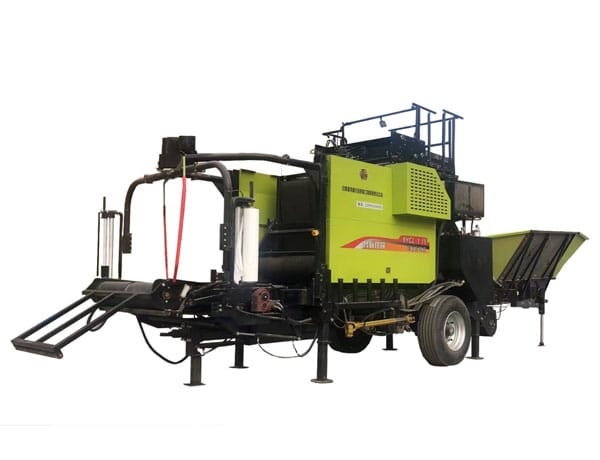
If you have been searching for a 750mm film baler, you are almost certainly looking to produce large, heavy silage bales, the kind that hold close to a ton of forage each. The width of the film is not a random detail. It tells you directly what size of bale a machine is built to wrap, and a 750mm film width points squarely at large-bale, high-capacity baling. In this guide we explain what a 750mm silage film baler actually is, why film width matters so much, and which Jummos machine is designed for it.
Why Film Width Tells You the Bale Size
Silage stretch film comes in a range of widths, and each width is matched to a particular bale size. A narrow film such as 250mm is used on compact bales weighing 50 to 120 kg, while wider films wrap progressively larger bales. By the time you reach 750mm film, you are wrapping the largest bales in the range, weighing around 950 to 1000 kg each.
This is why searching by film width is such a practical way to shop for a baler. If you already know you want big, one-ton bales, then you need a machine built around 750mm film. Buy a baler matched to a narrower film and you simply cannot produce bales that large. Match the film width to your target bale size first, and the right machine follows naturally.
For quick reference, here is how the common film widths line up with bale weight across the Jummos baler range.
| Silage Film Width | Typical Bale Weight | Best Suited To |
|---|---|---|
| 250mm film | 50 to 120 kg | Small farms, compact bales |
| 330mm film | 150 to 200 kg | Medium bales, mixed operations |
| 500mm film | 500 to 600 kg | Large bales, commercial farms |
| 750mm film | 950 to 1000 kg | One-ton bales, high-volume operations |
The Jummos 750mm Film Baler: 9YCL-1.15 Combi Baler Wrapper
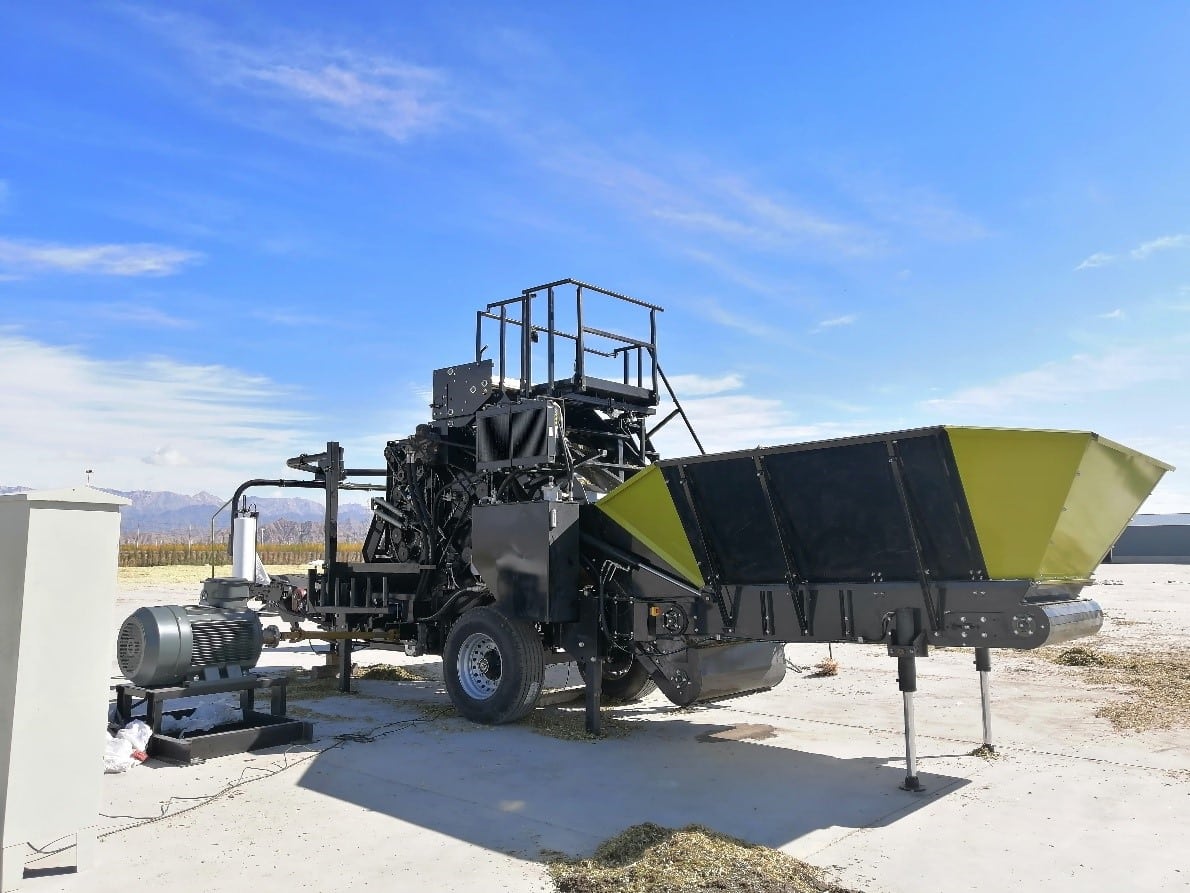
Within the Jummos range, the machine built around 750mm silage film is the 9YCL-1.15 Combi Baler Wrapper. It is a large-capacity, traction-type, two-in-one machine that bales and wraps silage in a single continuous pass, which removes the need for a separate wrapper and shortens the time the forage is exposed to air before it is sealed.
The 9YCL-1.15 produces large bales with a diameter of Φ1150 mm at a density of 650 to 800 kg/m³, based on corn silage at 65 to 70 percent moisture. It runs on an electric motor or tractor rated at 75 kW or more, and delivers a production capacity of 40 to 50 bales per hour, which makes it a genuine high-volume machine for commercial work. The baling side uses a fixed roller belt system with 17 rollers for firm, uniform shaping, while the wrapping side uses a spiral arm mechanism with 2 film holders for even, balanced film coverage.
The Film and Net Wrap It Uses
Because the film and the machine are matched from the start, it helps to know exactly what the 9YCL-1.15 runs on. The wrapping uses 750mm x 25um x 1500m silage stretch film, applied through two film frames for a complete, overlapping seal. On the netting side it takes a 1.23m x 2000m bale net wrap, and it can also run a 1.28m x 16um x 2000m inner barrier film for an extra layer of oxygen protection on high-value silage.
Since Jummos manufactures both the machine and the consumables, you can source the 750mm film, the net wrap, and the inner barrier film together with the baler as a single package, which avoids the common headache of trying to match film from one supplier to a machine from another. If you want to read more about the film itself, our guide to agricultural silage film covers the different types and how they protect your forage.
“When a customer tells me they want a 750mm film machine, I already know they are thinking about large-scale silage, because that width only makes sense on big bales. The advice I give is to look past the film width alone and check the whole package, the bale density, the net wrap, and whether you can get the film and the machine from the same maker. Matching all of those from the start saves a lot of frustration later, and it is the difference between bales that ferment well and bales that spoil at the edges.”
Sue Su, Marketing Director, Jummos
Who a 750mm Film Baler Is For
A 750mm silage film baler like the 9YCL-1.15 is built for operations that handle serious volume. It is not the right machine for a smallholding with a handful of animals, but it is an excellent fit for several kinds of operation.
Large commercial dairy and beef farms benefit from the big bale format, because fewer, heavier bales mean less handling, transport, and storage per ton of feed. Forage and silage contractors, who move quickly across large fields or multiple client sites, gain from the 40 to 50 bales per hour throughput and the large bale size. And operations that produce round bale silage for transport or trade find that high-density one-ton bales lower their logistics cost per ton, since there are simply fewer units to move.
The large bales this machine produces also feed naturally into a total mixed ration workflow, giving a consistent supply of quality silage for balanced cattle diets through the year.
Choosing the Right Baler by Film Width
If a 750mm film baler turns out to be more machine than you need, the same matching logic applies right across the range. Step down to 500mm film and you are looking at 500 to 600 kg bales from the 9YCL-1.0 combi model. Step down again to 330mm or 250mm film and you reach the medium and compact bale machines suited to smaller farms and lighter-duty work. The key is to start from the bale size you actually want, let that point you to the film width, and let the film width point you to the machine.
Whichever end of the range fits your operation, you can explore the full lineup on our baler wrapper page, or contact the Jummos team directly to confirm the right configuration for your bale size, power source, and forage type.
Frequently Asked Questions
What is a 750mm film baler used for?
A 750mm film baler is used to produce and wrap large silage bales weighing around 950 to 1000 kg each. The 750mm film width is matched to these big bales, so this type of machine is aimed at high-volume operations such as large dairy and beef farms and silage contractors. In the Jummos range, the 9YCL-1.15 Combi Baler Wrapper is the machine built around 750mm film, producing Φ1150 mm bales at 40 to 50 bales per hour.
Why does silage film width matter when choosing a baler?
Film width matters because it is directly tied to bale size. A machine built for 250mm film wraps small 50 to 120 kg bales, while a machine built for 750mm film wraps large one-ton bales. If you know the bale size you want, the film width tells you which class of machine you need. Choosing a baler whose film width does not match your target bale size means the machine simply cannot produce the bales you are after.
Can I buy the 750mm film together with the baler?
Yes. Because Jummos manufactures both the balers and the silage film, you can source the 750mm film, the matching net wrap, and the optional inner barrier film together with the 9YCL-1.15 as a single package. Buying the machine and the consumables from the same manufacturer ensures they are matched correctly, which avoids sealing and fit problems that can arise when film and machine come from different suppliers.
What power source does the 750mm film baler need?
The 9YCL-1.15 Combi Baler Wrapper requires a power source rated at 75 kW or more, running at 850 r/min, and it can be driven by either an electric motor or a tractor. As a traction-type machine weighing 9200 kg, it is towed and positioned by a tractor or prime mover, so you should confirm that your power and towing units meet these requirements before operation.
Reviewed by Sue Su, Marketing Director of Jummos, on July 30, 2026. Machine specifications were checked against the current Jummos 9YCL-1.15 product data to keep the details accurate for buyers.