
Peat moss is partly decomposed sphagnum moss that has built up in waterlogged bogs over thousands of years. Because those bogs are wet, acidic and starved of oxygen, the moss never fully rots, and what accumulates is a light, fibrous, brown material that holds a remarkable amount of water while still letting air reach plant roots. That combination is why it became the backbone of seed starting mixes, potting compost and greenhouse substrates across the world. It is also slow to form, carbon rich and increasingly regulated, which is why anyone using it seriously should understand both what it does well and where it falls short.
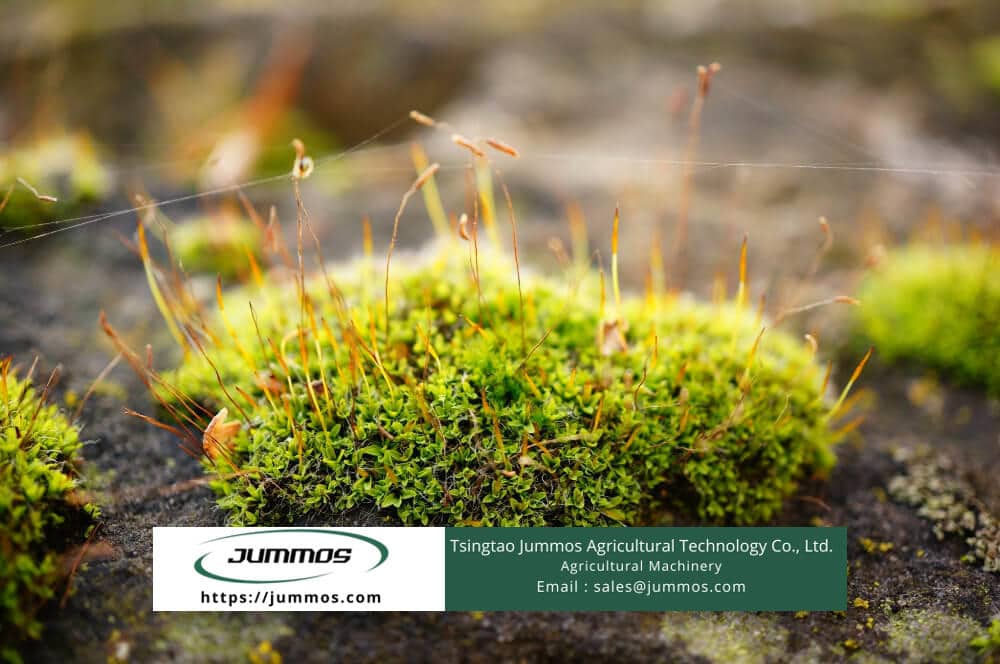
What Peat Moss Actually Is
Peat forms wherever plant material accumulates faster than it can decay. In a bog the water table sits at or near the surface, oxygen barely penetrates, and the acidity created by sphagnum itself suppresses the microbes that would normally break dead plant matter down. Layer upon layer settles, compresses and partially decomposes. The rate is slow, commonly cited at around a millimetre a year, which is why a metre of peat can represent the better part of a thousand years of growth.
The earlier version of this page said humans sometimes intervene to accelerate that process. They do not, and cannot in any practical sense. What people do is harvest peat: drain a section of bog, mill or cut the surface layer, let it dry, then screen and pack it. Formation is a natural process measured in centuries; extraction is an industrial one measured in seasons. That gap is the root of the environmental debate covered further down.
Not all peat is the same, and the differences matter when you buy it. Sphagnum peat moss, the type most gardeners mean, comes from the moss itself and is the lightest, most fibrous and most water retentive. Reed sedge peat forms from grasses and sedges, is darker and more decomposed, and holds less air. Within sphagnum peat, growers often distinguish light or white peat, which is younger and coarser, from dark or black peat, which is older, finer and more decomposed. Most horticultural sphagnum sold internationally comes from Canada, the Baltic states, Germany and Scandinavia.
A practical point that confuses many buyers: sphagnum moss and sphagnum peat moss are not the same product. Sphagnum moss is the living or recently dried plant, long stranded and used for lining baskets and in orchid culture. Peat moss is the decomposed material dug from below the bog surface. They look different, behave differently, and as noted below, carry slightly different handling advice.
From Fuel to Horticulture
Peat was a fuel long before it was a growing medium. Dried and cut into blocks, it heated homes across Ireland, Scotland, the Netherlands and Scandinavia for centuries, and it was later burned at industrial scale for electricity in countries such as Ireland and Finland. That use has been shrinking sharply as countries move away from it for climate reasons, but it has not entirely disappeared.
Horticultural use grew through the twentieth century as commercial growers discovered how consistent and controllable peat based mixes were. Today it is used in seed and cutting compost, container and pot plant production, greenhouse vegetables, nursery stock, and as the casing layer in mushroom production, where a peat based layer over the colonised compost triggers the mushrooms to form. Indoor ornamental plants are a large market, but by volume the biggest users are professional growers.
The Properties That Make Peat Useful, and Their Limits
The original article described several of peat’s qualities in ways that were partly right and partly misleading. The table below sets out each property with what it actually means in practice.
| Property | What it means | The caveat |
|---|---|---|
| Water holding | Sphagnum peat holds many times its own dry weight in water, keeping roots moist between waterings | Once fully dried it becomes water repellent and is hard to rewet without soaking or a wetting agent |
| Air space | Its fibrous structure keeps pores open, so roots get oxygen even when the mix is moist | Air space falls as the peat breaks down and compacts over a season or two in containers |
| Acidity | Raw sphagnum peat is strongly acidic, roughly pH 3.5 to 4.5 | Most plants need it limed; commercial mixes add lime to bring pH up to around 5.5 to 6.5 |
| Nutrient holding | High cation exchange capacity means it holds onto fertiliser nutrients rather than letting them wash straight through | It contains almost no nutrients itself; plants grown in peat need feeding |
| Cleanliness | Generally low in weed seeds and plant pathogens, which is why it suits seedlings | Low is not zero; it is not sterile |
| Weight | Very light when dry, cheap to ship and easy to handle | Light dry peat blows away if used as an unanchored surface mulch |
Two claims from the earlier version deserve a direct correction. It said peat never solidifies or decomposes over time. In fact it continues to break down slowly once harvested and exposed to air, which is why container mixes slump and lose structure after a season or two. It also said peat stops nutrients from evaporating during rain. Nutrients are not lost by evaporation; they are washed down through the soil, a process called leaching, and peat’s ability to hold nutrient ions is what slows that.
How to Use Peat Moss

Peat works best as one ingredient in a mix rather than on its own, and the ratio depends on the job. The four uses below cover most of what gardeners and growers need it for.
Seed Starting
Seedlings need a medium that stays evenly moist, drains freely, and carries little risk of disease or weed competition. A typical home seed mix combines peat with perlite or vermiculite for drainage and aeration, plus a small amount of lime to correct pH. Because peat itself provides almost no nutrition, seedlings that stay in the mix beyond their first true leaves need a dilute feed or transplanting into a richer compost.
Potting and Container Mixes
For containers, peat usually makes up the bulk of the mix, with perlite, bark or grit for structure and drainage, lime for pH, and a starter fertiliser. Pre moisten the peat before mixing, because dry peat repels water and will leave dry pockets in the pot that roots cannot use. A simple test is to squeeze a handful: it should feel like a damp sponge, with a few drops of water at most.
Amending Garden Soil
Mixed into sandy soil, peat improves water retention. Mixed into heavy soil, it helps open the structure, although compost and well rotted manure do this at least as well and add nutrients peat cannot. Where peat genuinely stands out is for acid loving plants such as blueberries, azaleas, rhododendrons and camellias, where its acidity helps rather than hinders. Mix it into the planting area and root zone for these plants rather than working to a fixed depth; the earlier version’s instruction to insert it at 30 centimetres had no particular basis.
The same article suggested adding powdered limestone to keep soil acidity good. Lime raises pH, making soil less acidic, so the two tips worked against each other unless you understood which plants you were growing. For most vegetables and ornamentals, lime the peat. For acid lovers, do not.
Mushroom Casing
In commercial mushroom growing, a casing layer is spread over the colonised compost, and peat based casing is the standard. It holds moisture at the surface and changes conditions in a way that prompts the mushrooms to fruit. The earlier version of this page referred to this as mushroom cast; the correct term is casing.
Common Mistakes
- Using it bone dry. Dry peat sheds water. Moisten it thoroughly before mixing or planting, and rewet a dried out pot by soaking it from below rather than watering from the top.
- Expecting it to feed plants. Peat holds fertiliser well but supplies almost none itself. Growth in a peat mix depends on what you add.
- Forgetting the pH. Unlimed peat is too acidic for most crops. Buy a limed mix or add lime yourself unless you are growing acid lovers.
- Using it as a surface mulch. Dry peat forms a crust that sheds rain and blows in the wind. Bark or compost make better mulches.
- Handling sphagnum moss bare handed. Sporotrichosis, a fungal skin infection that enters through cuts and scratches, has been associated with handling sphagnum moss. Wearing gloves when working with sphagnum moss and peat products is a simple precaution, and dust masks help when handling large volumes of dry material.
How Peat Is Packed and Stored
Most horticultural peat reaches buyers in compressed bales or bags, pressed by dedicated industrial balers at the processing plant so that a large volume of loose peat ships in a small package. Once opened, a compressed bale expands considerably, so loosen it thoroughly and moisten it before use. The earlier version of this page described baking peat for storage, which appears to have been a typing error for baling.
Storage is straightforward. Keep unopened bales dry, out of direct sun and off the ground, since moisture and UV degrade the packaging. Once a bale is open, reseal it or cover it, because peat dries out and becomes hard to rewet, and keep it away from weed seeds and contaminants. Properly stored peat keeps for a long time, though it slowly continues to break down.
It is worth being clear about one point here, because the earlier version of this page suggested otherwise. The balers that compress horticultural peat are specialised industrial presses. Agricultural forage balers, including the round balers and baler wrappers Jummos manufactures, are designed to form and wrap bales of grass, hay, straw and silage crops, not to compress peat for retail packaging.
The Environmental Question
Peatlands are a far bigger store of carbon than their size suggests. According to the IUCN, they cover at least 3 percent of the world’s land surface yet hold more than 600 gigatonnes of carbon, more than is stored in all other vegetation types, including the world’s forests. Intact, waterlogged peat locks that carbon away. Draining a bog to harvest it exposes the peat to oxygen, and it begins to release carbon dioxide as it breaks down, both on the bog and later in the garden.
That is why peat use is increasingly restricted. England announced plans in 2022 to end the retail sale of peat compost to amateur gardeners, originally from 2024, but as of early 2026 the legislation had still not been passed and the government had reaffirmed its intention to legislate without a fixed date. Professional growers have generally been given longer transition periods. Rules differ by country and change frequently, so anyone selling or buying peat products commercially should check current regulations in their market rather than relying on a figure from an article.
Peat Alternatives Worth Knowing
No single material reproduces every property of peat, which is why most peat free mixes are blends. The main options each bring something different.
| Alternative | Strengths | Weaknesses |
|---|---|---|
| Coir (coconut fibre) | Good water holding and rewets more easily than peat; near neutral pH | Can carry salts if poorly washed; shipped long distances |
| Composted bark | Good structure and drainage, slow to break down | Holds less water; can lock up nitrogen if not fully composted |
| Wood fibre | Light, open structure, renewable | Low water holding on its own; best blended |
| Green waste or manure compost | Adds nutrients and organic matter, improves soil life | Variable quality; often too rich and salty for seedlings unless blended |
| Rice husk, raw or parboiled | Cheap and widely available in rice growing regions; improves drainage | Low water holding; needs blending |
For garden soil improvement, as opposed to seed mixes, well made compost is generally a better choice than peat, because it adds nutrients and feeds soil biology rather than simply holding water. Peat retains a clearer advantage in seed starting and specialist container mixes, which is where most remaining use is concentrated.
Where Peat Meets the Livestock Farm
Peat and livestock overlap in two places that matter to farmers. In parts of Europe, peat has been used as bedding for horses and cattle because it is highly absorbent and its acidity helps bind ammonia. It is dusty when dry and has the same environmental questions attached as horticultural peat, so it is far less common than straw, sawdust or sand, but it does exist as a bedding material.
The more significant link runs the other way. Livestock manure, collected properly and composted, is one of the most widely available peat alternatives for soil improvement. A dairy or beef unit produces a large, steady supply of organic matter, and once composted it improves soil structure, water holding and fertility in a way peat cannot match for field and garden use. The constraint is collection and handling: manure that is scraped, vacuumed or loaded out of the shed promptly and composted under control produces a far better material than manure left to sit. Our articles on manure and on choosing a dairy dung cleaner cover that side of the process.
Jummos and Farm Equipment
Tsingtao Jummos Agricultural Technology Co., Ltd. manufactures agricultural machinery at No.173 Jufeng Road, Qingdao, China, including round balers and baler wrappers for forage and silage, TMR feed mixers, and manure handling equipment such as the dung truck and manure vacuum cleaner. If you run a livestock operation and want to turn manure into a usable soil amendment rather than a disposal problem, our team can advise on the collection side of that system at no cost.
Frequently Asked Questions
What is peat moss made of?
Peat moss is made mainly of partly decomposed sphagnum moss that has accumulated in waterlogged, acidic bogs over hundreds to thousands of years. The lack of oxygen and the acidity slow decay so much that the moss builds up as peat rather than rotting away. Other peats form from sedges and grasses and are darker and more decomposed.
Is peat moss acidic?
Yes. Raw sphagnum peat typically sits around pH 3.5 to 4.5, which is too acidic for most plants. Commercial potting mixes add lime to raise it to roughly 5.5 to 6.5. Unlimed peat suits acid loving plants such as blueberries, azaleas, rhododendrons and camellias.
Does peat moss contain nutrients?
Very few. Peat is good at holding onto nutrients you add, thanks to its high cation exchange capacity, but it supplies almost none of its own. Plants grown in peat based mixes need fertiliser, either mixed in at the start or fed regularly.
Why won’t my dry peat moss absorb water?
Fully dried peat becomes water repellent, so water runs off or straight through instead of soaking in. Rewet it by mixing in warm water gradually, letting it stand, or soaking pots from below. A small amount of wetting agent also helps. The best fix is prevention: never let peat based mixes dry out completely.
What can I use instead of peat moss?
Coir, composted bark, wood fibre, well made compost including composted manure, and rice husk are the main alternatives, usually blended because none replicates peat on its own. For improving garden soil, compost is generally the better choice. For seed starting, coir based or blended peat free mixes are the closest substitute.
Reviewed by Sue Su, Marketing Director at Tsingtao Jummos Agricultural Technology Co., Ltd., a manufacturer of balers, bale wrappers, TMR mixers and manure handling equipment based in Qingdao, China. Last reviewed 15 November 2026.