
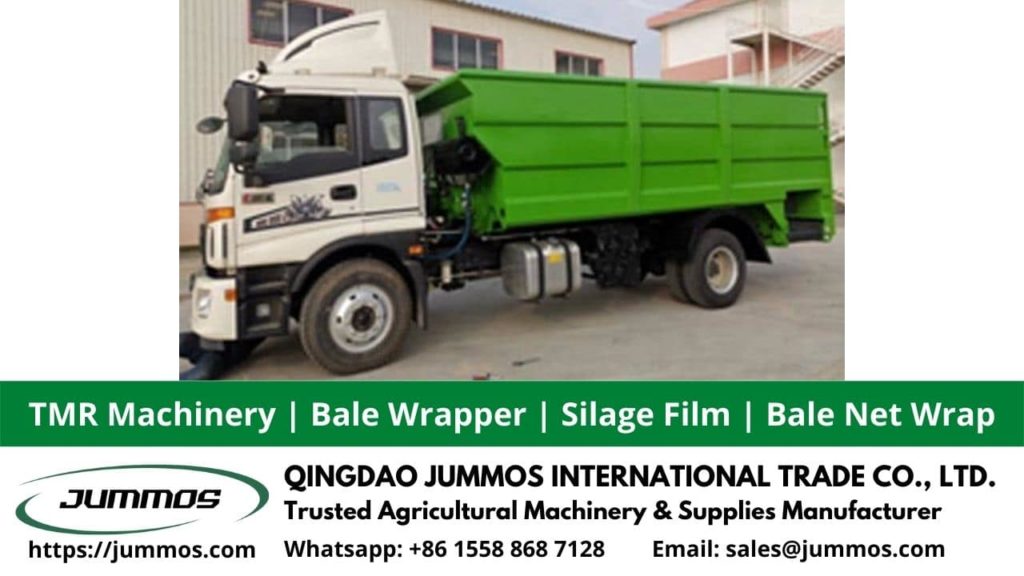
A TMR mixer truck for sale at a sensible price is welcome news for any farmer who needs new feeding equipment. This is a substantial machine, and it earns its place in husbandry because a mixer on its own cannot go anywhere. Without a vehicle carrying it, the blending unit sits in one spot and the forage has to come to it, which makes managing feed and storage considerably harder. Forage is also lost in the handling every time feed is transferred between machines.
That is the case for a truck-based machine in a sentence. What is less obvious is which vehicle format actually suits your farm, because a truck is not the only option. This guide compares the three, and covers what to check before you buy.
Truck, Wagon, or Tractor?
There are three common ways to give a TMR mixer mobility, and choosing between them is genuinely confusing if you have never operated all three. Testing them properly is not realistic either. A single drive tells you very little; a fair assessment needs a week of real work, and arranging that for three machines would cost a fortune.
So most buyers rely on other people’s experience, either by reading what existing users say or, better, by talking to them directly. A conversation gets you follow-up questions and real-time answers that a written review cannot. If you can find someone farming in conditions similar to yours, that is worth more than any specification sheet.
What follows is the practical difference between the three formats.
| Format | How It Works | Where It Fits Best |
|---|---|---|
| Truck mounted | Mixer body built onto a truck chassis with its own engine and cab | Longer distances between feed store and barn, road travel, uneven ground |
| Trailed wagon | Towed behind a tractor and driven from the PTO | Farms with a suitable tractor already available and shorter distances |
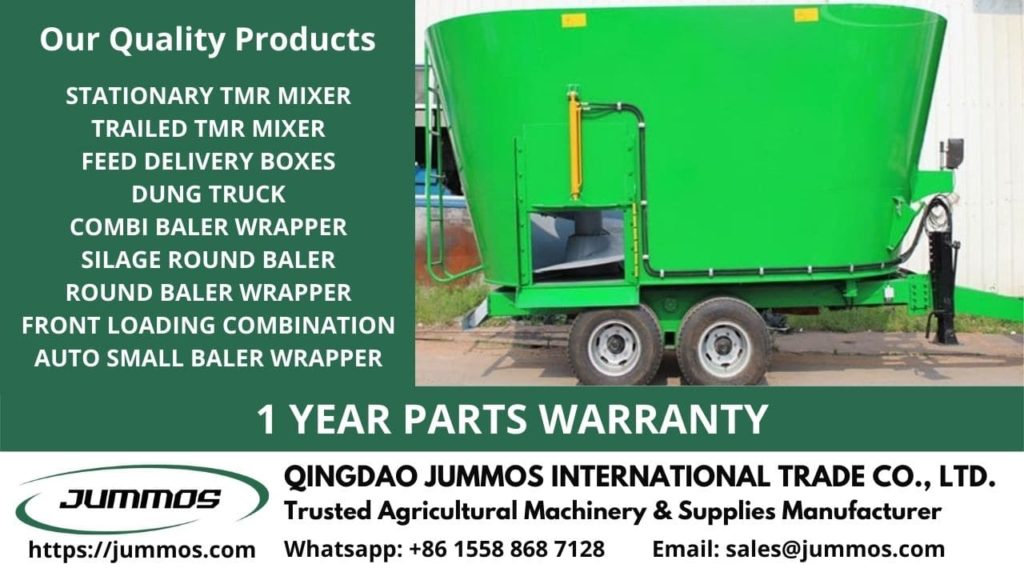
| Stationary | Fixed at a mixing station, feed moved separately afterwards | Compact farms where the mixing point sits close to the feed line |
The reasons a truck often comes out ahead are mechanical rather than a matter of opinion. A truck chassis is engineered for carrying heavy loads over distance, with suspension and braking designed around that job, so it rides more comfortably over uneven surfaces and stays stable with a full load shifting behind the cab. It also protects the load better and can move at road speed between sites, which a tractor and trailed wagon cannot match.
That does not make it the right answer for everyone. If your feed store sits fifty metres from the barn and you already own a suitable tractor, a trailed wagon does the same job for considerably less money, and the tractor stays useful for other work when feeding is done. The truck earns its premium on distance, on road travel, and on farms feeding several groups in different locations.
What to Check Before You Buy
Whichever format you settle on, the same practical checks apply, and working through them beforehand saves expensive surprises.
- Capacity against your daily volume. Size the machine to the feed you actually mix each day. Too small and you are running extra batches twice daily; too large and you have paid for volume you never fill.
- Access and turning space. Measure your feed alley, gateways, and turning areas. A machine that cannot manoeuvre where you feed is no bargain at any price.
- Power source. A truck brings its own engine. A wagon needs a tractor with adequate PTO power, so confirm what you have before assuming it will cope.
- Discharge arrangement. Check which side the machine discharges and whether that matches your feed line layout.
- Weighing system. An onboard scale turns feeding from estimation into measurement, which matters if you group animals by production stage.
- Parts and service. Ask what the warranty covers and how wear parts such as knives are supplied. A feeding machine runs every day, so downtime is not an inconvenience but a real problem.
“The question I get asked is nearly always about price, but the question that actually decides satisfaction is distance. If a customer is moving feed a few hundred metres, a trailed wagon behind the tractor they already own is usually the better buy and I will tell them so. If they are driving between barns or out onto a road, the truck pays for itself in time and in wear on a tractor that was never meant for that duty. The right machine follows the farm layout, not the budget.”
Sue Su, Marketing Director, Jummos
Where to Buy
Buying direct from the manufacturer is generally the most straightforward route, because you get the full range of configurations rather than whatever a local dealer happens to stock, and you can discuss customisation before anything is built.
We are Jummos, a manufacturer of TMR machinery and other agricultural equipment based in Qingdao, China, and our pricing is competitive without waiting for a seasonal promotion. We build trailed and stationary TMR mixers, feed spreader trucks, bale wrappers, and manure cleaning equipment, with colour and capacity customisable and OEM supply available for distributors.
Every product comes with a one-year guarantee, so if something goes wrong within that period, it is our responsibility rather than yours. If you want to understand how the truck format works in practice before deciding, our detailed guide to the TMR mixer truck covers the parts, capacities, and daily operation.
Tell us your herd size, your feed volume, and the distance between your feed store and your feed line, and we will recommend a configuration honestly rather than simply quoting the largest machine.
Frequently Asked Questions
Is a TMR mixer truck better than a trailed wagon?
Not automatically. A truck has its own engine and a chassis built for carrying heavy loads, so it handles distance, road travel, and uneven ground better, and it frees your tractor for other work. A trailed wagon costs considerably less and does the same mixing job well when distances are short and you already own a suitable tractor. The deciding factor is usually how far the feed has to travel and how many locations you feed.
What size TMR mixer truck do I need?
Work backwards from the volume of feed you mix in a day rather than from the size that sounds impressive. Then check the machine’s dimensions against your feed alley, gateways, and turning space, because manoeuvrability limits are as real as capacity limits. If you are between two sizes, consider whether your herd is likely to grow, since running one batch instead of two saves time every single day.
Do I have to wait for a sale to get a good price?
No. Buying direct from a manufacturer generally gives you competitive pricing year round, along with the ability to specify the configuration you actually need. Waiting for a seasonal promotion can mean accepting whatever specification happens to be in stock, which is a poor trade if it does not suit your farm. It is worth asking about pricing and lead time directly rather than assuming you have to wait.
Reviewed by Sue Su, Marketing Director of Jummos, on September 8, 2026. Machine format guidance was reviewed to keep the comparison practical and accurate for buyers.