
The Advantages of Cotton Harvest Residue, From Gin Trash to Stalks
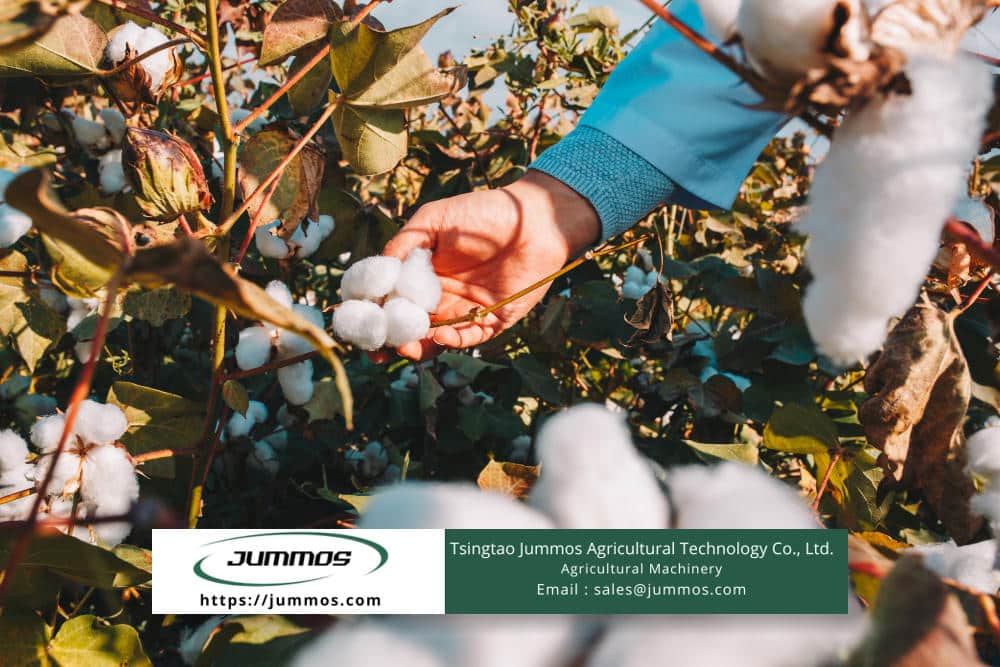
A cotton field produces far more than lint. For every bale of fibre that leaves the gin, there is cottonseed, a pile of gin trash made of burrs, leaves, stems and short fibre, and a field of woody stalks still standing after harvest. For a long time most of that was treated as something to burn, plough in or haul away. Much of it has real value: gin trash as a winter feed for beef cows, stalks as grazing, soil cover and biomass, and cottonseed as one of the most energy dense feeds available to cattle. Each comes with practical limits, though, and some of the advice that circulates about cotton residue skips over them. This article covers what each residue is good for, where the risks are, and the packaging that protects the lint itself between field and gin.
What a Cotton Crop Leaves Behind
Cotton is grown for the fibre, but the fibre is a small share of the plant’s total mass. The rest arrives at different points in the harvest and processing chain, and each stream has different uses.
| Residue | Where it arises | Main uses |
|---|---|---|
| Gin trash | Separated at the gin: burrs, leaf, stem fragments, short lint, some broken seed, soil | Beef cow roughage, soil amendment, mulch, compost |
| Cottonseed | Removed from the lint at the gin | High energy cattle feed whole, oil extraction, meal and hulls as feed |
| Stalks | Left standing in the field after picking or stripping | Grazing, ground cover, biomass fuel, particleboard and fibre products |
| Unopened bolls, burrs and leaf in the field | Left behind by the harvester, more so with spindle pickers | Grazed by cattle along with the stalks |
The quantities are not trivial. According to University of Georgia Extension, each 480 pound bale of cotton produces approximately 150 to 200 pounds of gin trash, roughly 70 to 90 kilograms. A gin processing tens of thousands of bales a season therefore generates thousands of tonnes, which is why finding a use for it matters to gins as much as to farmers.
Cotton Gin Trash as Cattle Feed
Gin trash is a legitimate feed, but it is a roughage, not a high quality feed, and the way it is sometimes described oversells it. UGA Extension reports average values of about 11 percent crude protein, 11 percent ash and 46 percent total digestible nutrients on a dry matter basis. That protein level is moderate rather than high, and the energy is low. In practice that means gin trash can usually meet a cow’s protein needs on its own, but an energy supplement is normally required. In one Georgia trial, cows fed gin trash alone lost weight, and only held weight once a few pounds of corn per day were added.
The earlier version of this page suggested gin trash as a substitute feed for animals that are pregnant, calving or nursing. That needs correcting. Extension guidance describes gin trash as best suited to dry, pregnant mature cows, whose nutritional demands are at their lowest. Lactating cows, young growing cattle and first and second calf heifers need more energy than gin trash can supply, and UGA specifically advises against feeding it as the primary ingredient until cows are pregnant with their third calf. In feedlot rations it is used as a small roughage component, around 5 to 10 percent of diet dry matter.
Three practical issues decide whether gin trash works on a given farm.
- Palatability. Cattle often refuse gin trash at first and may take several days to adapt. Heavy soil contamination makes it worse, which is one reason gin trash varies so much from load to load.
- Moisture and mould. Wetting gin trash to control dust can lead to moulding, reducing palatability and in some cases producing toxic moulds. Store it dry and covered.
- Chemical residues. This is the most important caution. Cotton is treated with insecticides, herbicides and harvest defoliants, many of which are not cleared for use on livestock feed, and residue tolerances for gin trash have not been established. Feeding it carries a liability risk. Check the labels of products used on the crop, and have a sample analysed for nutrients and residues before feeding at any scale.
Gossypol is the other cotton specific risk. It is a natural compound in cottonseed that is toxic to cattle in large amounts, and gin trash can contain seed fragments. The main concern is with cottonseed products themselves and with bulls, which can overeat when self feeding. UGA advises against letting bulls graze cotton fields at all.
Gin trash is a useful winter roughage for the right animal, and the right animal is a dry, pregnant mature cow with an energy supplement. Feeding it to milking cows or young stock because it is cheap is where the trouble starts. Test it first, for nutrients and for residues, because no two loads are the same. Sue Su, Marketing Director, Tsingtao Jummos Agricultural Technology Co., Ltd.
Cottonseed, Hulls and Meal
Gin trash gets the attention in discussions of cotton residue, but the seed is the more valuable byproduct by a wide margin. Separated from the lint at the gin, cottonseed is either fed whole or crushed for oil, and crushing produces two more feeds: cottonseed meal and cottonseed hulls. Each sits in a very different place nutritionally, and confusing them leads to poorly balanced rations.
- Whole cottonseed is one of the most energy dense feeds available to cattle, at around 23 percent crude protein, 95 percent TDN and 17.5 percent fat according to UGA. That fat content is why it is popular in dairy rations, and also why it has to be limited. UGA suggests up to about 7 pounds per day for mature cows, and notes that stocker calves perform poorly when it exceeds 15 percent of diet dry matter.
- Cottonseed meal is a protein supplement, at roughly 45 percent crude protein, and is generally kept to no more than 15 percent of diet dry matter.
- Cottonseed hulls are the opposite: very high in fibre, low in protein at around 4 percent, and poorly digested. They work as a roughage and are commonly fed at 25 to 50 percent of the diet, with no more than half the ration for brood cows.
The gossypol caution above applies most strongly here, because gossypol is concentrated in the seed. Upland cotton, the type most widely grown, generally carries less gossypol than Pima cotton, but limits on whole cottonseed and meal exist partly for this reason. Young calves are more sensitive than mature cattle, and bulls should not be allowed to overeat cottonseed products when self feeding. A nutritionist can balance these feeds against forage and energy sources so that the cheap, high value nutrients in cotton byproducts are used without running into the limits.
Put together, a cotton growing region offers livestock farmers an unusual range of feeds from a single crop: an energy and fat source in the whole seed, a protein source in the meal, and two roughages in the hulls and gin trash. Farms that sit near a gin are often well placed to use all four, provided they test what they buy and respect the inclusion limits.
Grazing Cotton Stalks
The simplest use of cotton residue is to turn cattle onto the field after harvest. Cows graze the leaves, burrs, unopened bolls and lint left behind, which are considerably more nutritious than the bare stalks. Spindle pickers leave more of this material in the field than stripper harvesters, so fields picked by spindle machines usually support more grazing.
As a rule of thumb, UGA puts stalk grazing at about 30 cow days per acre, with their own study achieving 44. Mowing or shredding the residue before grazing reduced grazing days by about a third, so where grazing is planned it pays to leave stalks standing until the cattle have finished. Grazing also has to fit around pest control rules, which leads to the next point.
Cotton Stalks: Soil, Pests and Biomass
Stalk management is not purely a question of value. In many cotton growing regions, stalks must be shredded and destroyed by a set date after harvest to break the life cycle of pests such as the pink bollworm and the boll weevil, which overwinter in standing plants. Any plan to graze, bale or otherwise use stalks has to work within those deadlines, so check the local rules before deciding.
Ploughed or left on the surface, shredded stalks return organic matter to the soil and help protect it from wind and water erosion. Residue cover also suppresses some weed emergence by shading the soil surface. How much residue to leave depends on soil type, slope, rainfall and the following crop, so there is no universal percentage, and the earlier version of this page’s suggestion of a fixed share should be treated with caution.
Where stalks are surplus to soil needs, they are a substantial biomass resource. Cotton stalks are woody, with properties closer to wood than to cereal straw, and in countries including China, India and Egypt they are collected for use as fuel, compressed into pellets and briquettes, or burned in biomass power plants. The difficulties are the ones the original article hinted at. Stalks are bulky, harvested over a short window, spread across many farms and hard to store without degrading, so the economics depend heavily on how far they have to travel and how efficiently they can be collected and densified. Because stalks are stiff and woody, they are normally shredded or chopped before any densification, and equipment suitability should be confirmed for stalk material specifically rather than assumed from cereal straw. Our article on the utilization of straw from various types of plants covers the wider picture for crop residues.
Burning stalks in the field remains common in some regions because it is quick and cheap. It also destroys organic matter, releases smoke and particulate pollution, and wastes a resource, which is why many governments now discourage or restrict it.
Emerging Uses for Cotton Stalks
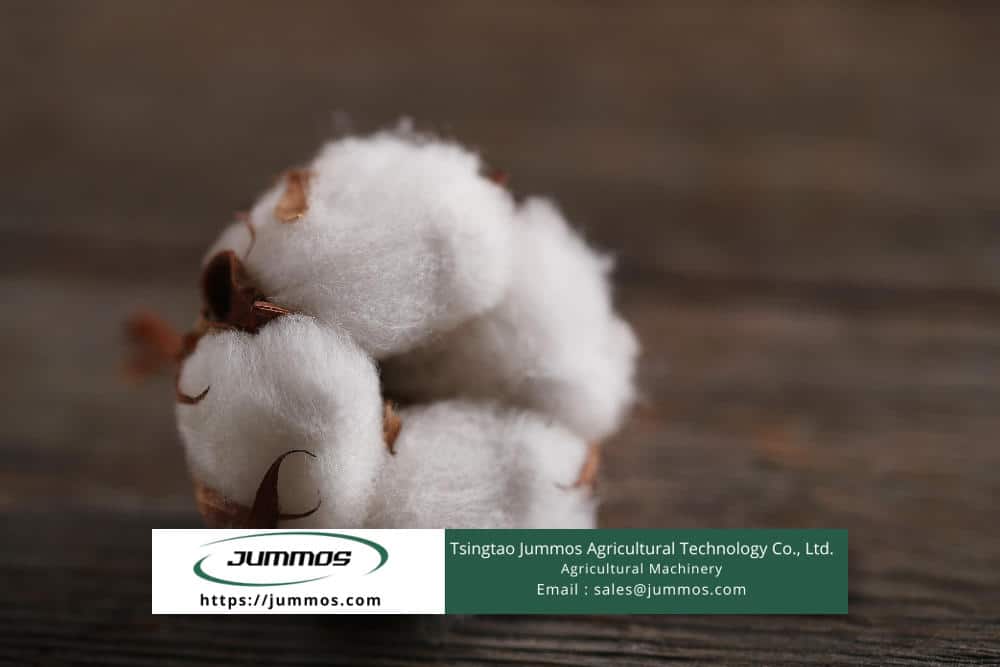
Beyond feed, soil and fuel, cotton stalks are the subject of a steady stream of research and some commercial production. They have been processed into particleboard and fibreboard as a partial substitute for wood, and their fibres studied as reinforcement in composite and cement based building materials. In laboratories, chemically treated stalks have been converted into porous activated carbon, including as a support for metal nanoparticle catalysts. Cotton stalks and gin trash are also used in some regions as a growing substrate for mushrooms such as oyster mushrooms.
These uses are real, but most remain small in scale compared with grazing, soil return and fuel. For a farmer, the near term value of cotton residue lies in the fields and the feed yard rather than the laboratory.
Protecting the Lint: Cotton Wrap Film
The residue story has a counterpart at the other end of the harvest. Modern cotton pickers with on board module builders form the harvested seed cotton into large round modules and wrap each one in polyethylene film before setting it down in the field. That wrap is what keeps the seed cotton dry and clean while modules wait in the field and travel to the gin, sometimes for weeks.
The quality of that wrap matters more than its price suggests. Rain getting into a module damages fibre quality and can lead to heating and discolouration. And because the gin removes the wrap before processing, film that tears or fragments in the field is a known source of plastic contamination in lint, one of the most damaging quality faults a bale can carry. A wrap that clings well, resists punctures and holds up to sunlight protects both the crop’s value and the reputation of the gin that processes it.

Jummos supplies cotton wrap film for modern cotton module wrapping machinery, produced together with our sister brand Silopak. The published specification is set out below.
| Specification | Cotton wrap film |
|---|---|
| Material | High performance polyethylene |
| Thickness | 75 µm |
| Width | 2.7 m (106 in) |
| Wrap length | 21 m (69 ft) |
| Core length | 2.8 m (9 ft 2 in) |
| Roll weight | Approximately 100 kg (220 lb) |
| Colours | Yellow, red, pink or blue; custom colours for OEM orders |
| Packing | 9 or 12 rolls per pallet |
Before ordering, confirm that the 2.7 metre width and the core size match your machine, since wrapping systems differ between picker models. For current pricing, minimum order quantity, lead times and export terms, contact our sales team directly.

Jummos, Agricultural Machinery and Film
Tsingtao Jummos Agricultural Technology Co., Ltd. manufactures agricultural machinery at No.173 Jufeng Road, Qingdao, China, including round balers and bale wrappers for forage and silage, TMR feed mixers and manure handling equipment, and supplies net wrap, silage film and cotton wrap film through its sister brand Silopak. If you are planning to collect cotton residue, or need module wrap for the coming harvest, our team can advise on which products fit your operation, and will tell you plainly where a machine is not designed for the material you have in mind.
Frequently Asked Questions
Can cattle eat cotton gin trash?
Yes, as a roughage, mainly for dry pregnant mature beef cows. It averages around 11 percent crude protein and 46 percent TDN, so cows usually need an energy supplement. It is not suited to lactating cows, young stock or first and second calf heifers as a main feed. Cattle often need several days to adapt, and residues from crop chemicals are a real concern, so test before feeding.
How much gin trash does a bale of cotton produce?
According to University of Georgia Extension, each 480 pound bale of cotton produces roughly 150 to 200 pounds of gin trash, about 70 to 90 kilograms. The exact amount varies with harvest method, field conditions and how clean the seed cotton is when it reaches the gin.
What can cotton stalks be used for?
Grazing by cattle after harvest, ground cover and organic matter when shredded and left on the field, and biomass fuel in the form of pellets, briquettes or power plant feedstock. They are also used in particleboard and fibre products and studied for other industrial uses. Local stalk destruction rules for pest control often set the timetable for whatever you plan to do.
What is cotton wrap film?
Cotton wrap film is the polyethylene wrap applied by on board module builders on modern cotton pickers to cover round modules of seed cotton. It protects the cotton from rain and contamination during field storage and transport to the gin. Jummos cotton wrap film is 75 µm thick and 2.7 metres wide, with a roll weight of about 100 kilograms.
Reviewed by Sue Su, Marketing Director at Tsingtao Jummos Agricultural Technology Co., Ltd., a manufacturer of balers, bale wrappers, TMR mixers and manure handling equipment based in Qingdao, China. Last reviewed 20 November 2026.