
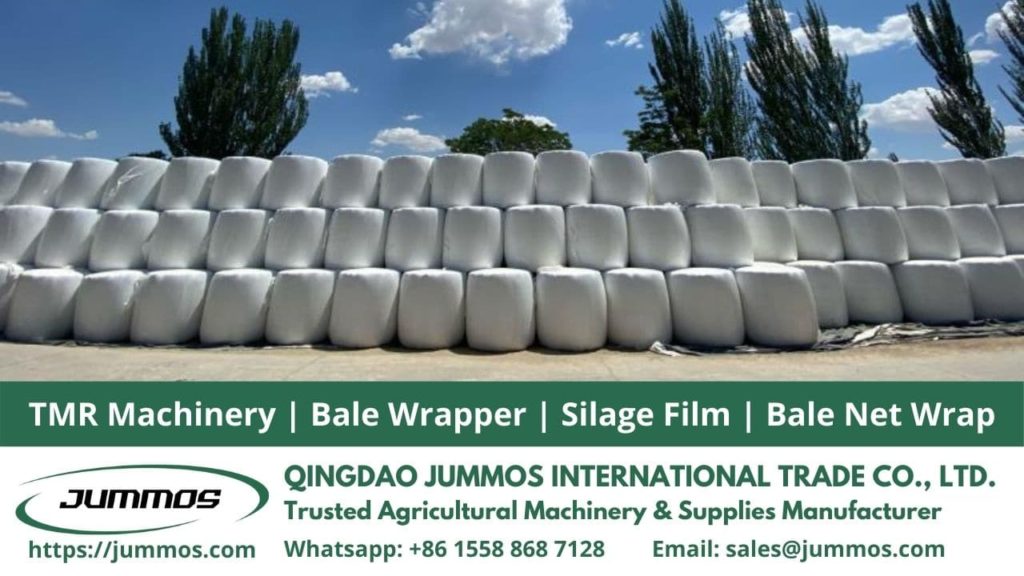
In general, cattle breeders feed some types of grass, rice straw, peanut straw, and weed grass. Another addition is concentrate, which is made from ingredients low in crude fiber so it is easily digested by livestock. The term grasses here refers to forage crops that are deliberately grown to meet the need for feed. Usually, we plant them to be grazed by the cattle. To maintain the stock, some form of preservation is done. We know the popular ways to store it, such as hay or silage.
Growing Forage Crops on Three Principles
In any farming operation, the purpose for raising cattle can vary. They may be raised for meat, for breeding, or for other purposes. Many factors support and influence the outcome. The way we handle the treatment significantly affects the result. The process of raising them cannot be careless, and that includes how we choose the forage.
The forage given to livestock plays many beneficial roles. Better productivity can be reached by gradually evaluating the growth rate and the weight of the livestock. We also need to consider the availability of feed in both low and high seasons. For farmers and breeders, feed is essential to maintaining the stability of the business. Below are three principles for forage crop cultivation.
1. Good Selection, Good Result
Besides quality, the quantity of feed given should also be considered. Since there are many types of forage, we should be wise in choosing. Analyze the needs of the livestock first, since requirements differ from one animal to another. To get the most out of grazing, the selection should be made carefully.
Here are several indicators for a good selection. They include how we define the intention for planting, the forage types, and the crop rotation. Growing certain crops means expecting certain productivity. The climate of the origin area, soil condition, watering system, timing of growth, and other factors all potentially influence the crops. Michigan State University Extension notes that forage quality and yield move in opposite directions as a crop matures, which is why the choice of crop and the timing of harvest have to be planned together rather than separately.
Some farmers focus on a single crop, while others rotate. If you are weighing your options, our guide on wheat forage covers one strong candidate for cool-season grazing, and alfalfa fodder is worth a look if protein is your priority.
2. Establishing Healthy Crop Growth
You need to be prepared with the right strategies from the start. This covers how your crops will cope with weeds, how you will fertilize, and the details of sowing and seeding. Fertilizer plays an important role in maintaining nutrient content, although soil condition remains the primary factor. That is why the decision about the type of fertilizer should be discussed with an expert.
Minimize the presence of weeds as well, since they only interfere with the growth of the crops. You can plan a program to make your forage crops strong enough to survive pest attacks. Before taking action, first identify the types of weeds present and the recommended ways to control them.
3. Management from Grazing to Harvest
Once you are ready to grow the crops, it means you also need to be ready to manage them. Well-organized management helps enormously during both the growing process and the harvest. This includes managing the grazing, deciding how and when to graze, controlling pests, and choosing the preservation method.
A farmer can time the grazing for when the crops are at their most nutritious. Consider also the reproduction cycles and when the crops should be cut for hay. By following these principles, the effective growth of the crops can be controlled well.
| Principle | Key Decisions | Common Mistake to Avoid |
|---|---|---|
| Selection | Crop type, climate fit, soil, crop rotation plan | Choosing a crop without checking whether it suits the local climate and the animals being fed |
| Establishment | Sowing, seeding depth, fertilizer, weed and pest control | Fertilizing without a soil test, or letting weeds take hold early |
| Management | Grazing timing, rest periods, cutting stage, preservation method | Cutting too late, when yield is high but nutritional value has already dropped |
Turning the Crop into Hay or Silage
To answer the need for feed throughout the year, farmers commonly store the crop in another form. Some grow forage plants for conservation purposes only, while others keep the forage as a green supply and store whatever is left over. The usual types of preservation are hay and silage.
For producing either one, a few considerations apply. We need to decide the best time for cutting, because the timing is tied directly to the nutritional content of the forage. There is a peak moment where we get the best value from the nutrients. If we conserve the feed as hay, we need to manage the moisture so the material is right for the process that follows.
Each preservation route has its own method and its own equipment. If you want the detail, our articles on haylage compared with silage and on making silage bales walk through the practical steps for each.
“Every forage crop behaves differently once it leaves the field. Alfalfa, grass, and small grains all have their own moisture and handling quirks, and a machine set up perfectly for one will not necessarily give you a clean bale from another. The farms that get consistent results are the ones that choose their equipment after deciding what they are going to grow, not before.”
Sue Su, Sales Director, Jummos
We need suitable tools both for growing forage crops and for preserving them. In baling hay, for instance, you need machinery with the right functions to bring the material into perfect condition for processing. Finding the equipment is relatively easy, but judging the quality is quite hard.
Jummos brings real strengths to its products to help farmers get better results, from baler wrappers that seal your forage quickly to TMR mixers that blend it into a balanced ration. Trying to grow or preserve your yields? Feel free to reach out for a consultation. Just click the button.
Reviewed by the Jummos Content Team on July 16, 2026. Guidance on crop selection and harvest timing was checked against current agricultural extension sources.